New Bern at Risk of Losing up to 60% of Wetlands by 2100
A new study from North Carolina Sea Grant’s first Coastal Resilience Team Competition winners shows that preserving inland areas may help prevent the decline of environmental benefits as open water claims coastal wetlands.
New Bern, North Carolina, will lose a majority of its protected wetlands to open water by 2100, according to a new study from North Carolina Sea Grant’s first Coastal Resilience Team Competition winners. These vital ecosystems could have provided several million dollars of environmental benefits in the coming decades, but researchers expect wetlands loss will significantly curtail these benefits.
“Sixty percent of New Bern’s wetlands that are currently conserved could be lost by the end of the century,” says Anne Smiley, lead author and postdoctoral researcher at the UNC Institute for the Environment. “These wetlands perform essential functions, like filtering pollutants out of stormwater, stabilizing the shoreline, and supporting economically important fish.”
“Communicating the value and vulnerability of these wetlands can help us craft strategies for land use that protect ecological integrity and support economic growth,” Smiley says.
Past evaluations of environmental benefits have lacked a clear connection to the plans and needs of the community around them. Smiley and her research team have created a model that connects ecosystem value with local land use surveys to guide urban development practices.
The team specifically focused on the role wetlands play in nitrogen removal. According to Smiley, North Carolina’s coasts are facing increased flooding, meaning runoff from cities and farms that contain excess nitrogen is increasing as well. Without wetlands, which naturally filter out the excess nitrogen, coastal waters face water quality risks.
The study, featured in Environmental Research Letters, revealed that despite only accounting for 13% of the total land, areas currently designated for conservation in New Bern contribute 53% of environmental benefits through nitrogen removal — at least $90,000 worth of environmental benefits annually. If wetland loss continues at the predicted rate, there could be a total loss of around $4 million from lost nitrogen removal services over the next 75 years.
But, Smiley adds, the full range of lost environmental benefits — from all of the ecosystem services wetlands provide — would be “much, much larger.”
As these coastal wetlands are lost, communities will need to turn to inland wetlands for the same essential functions. However, Smiley says, a large portion of the inland wetlands are currently slated for development.
According to Smiley, urban planners may need to protect portions of wetlands currently without conservation designations, particularly those in urban transition spaces — areas on the perimeter of built-up land.
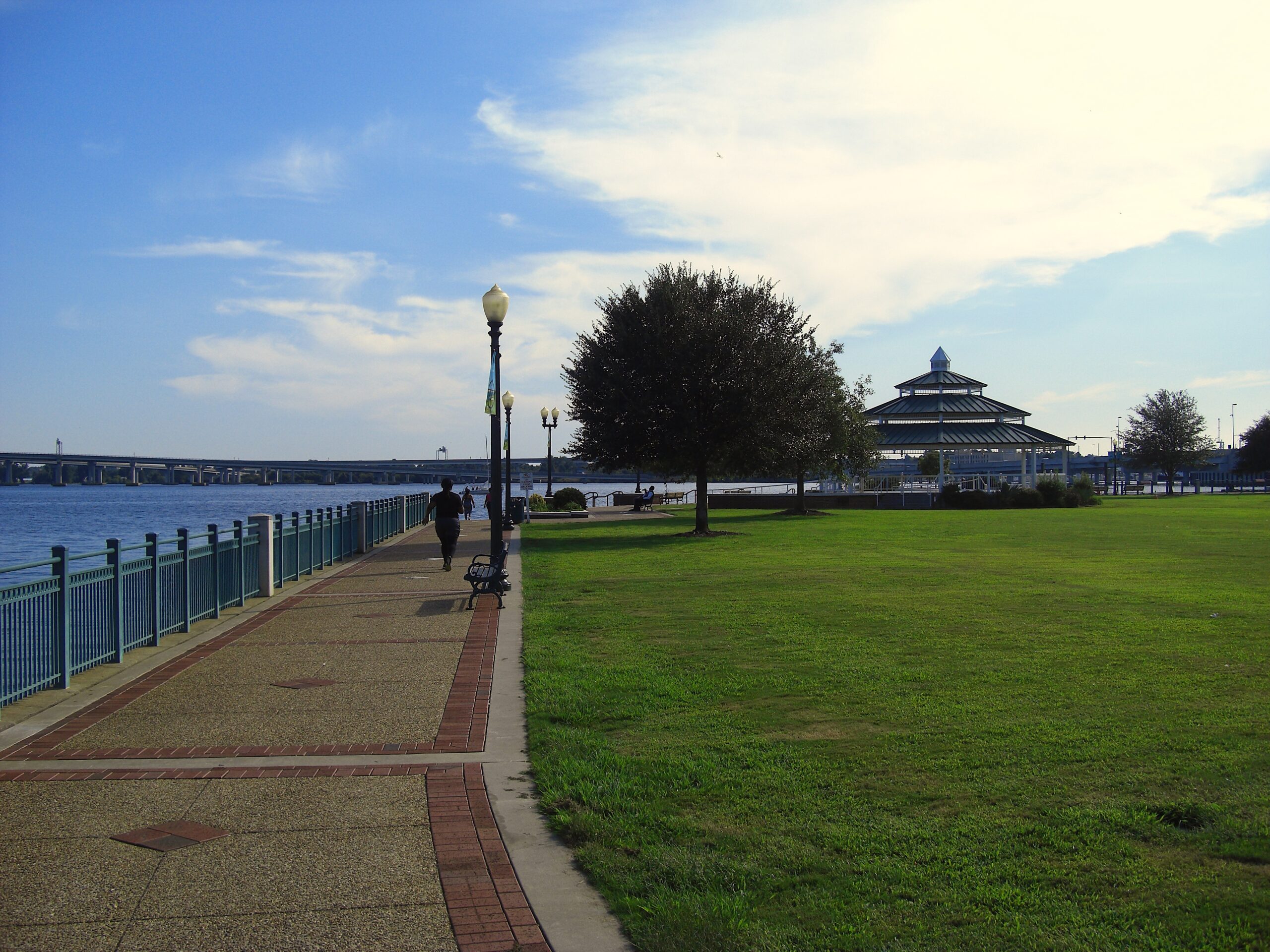
Not only did Smiley and her team identify the need for increasing wetlands protections, but their model also revealed that undeveloped open spaces, such as lawns, provide similar kinds of services.
“We don’t typically think of those kinds of ‘urban landscapes’ as providing ecosystem services, but they do,” says Smiley. “Future development should account for that value by maximizing area and connectivity of open spaces.”
Smiley says this study identified that proactive and strategic planning is crucial for minimizing wetlands loss and protecting the essential ecosystem services that allow the New Bern community to flourish.
“The goals of conservation and land use initiatives may vary,” she notes, “but none of them will be achieved if those habitats no longer exist.”
the full study: Coastal squeeze reduces nitrogen removal services provided by wetlands: insights from an interdisciplinary framework
More on the Coastal Resilience Team Competition
Lily Soetebier is a contributing editor for Coastwatch and a science communication intern at North Carolina Sea Grant. She is pursuing an M.S. in technical communication from North Carolina State University.
lead photo credit: Adobe Stock.