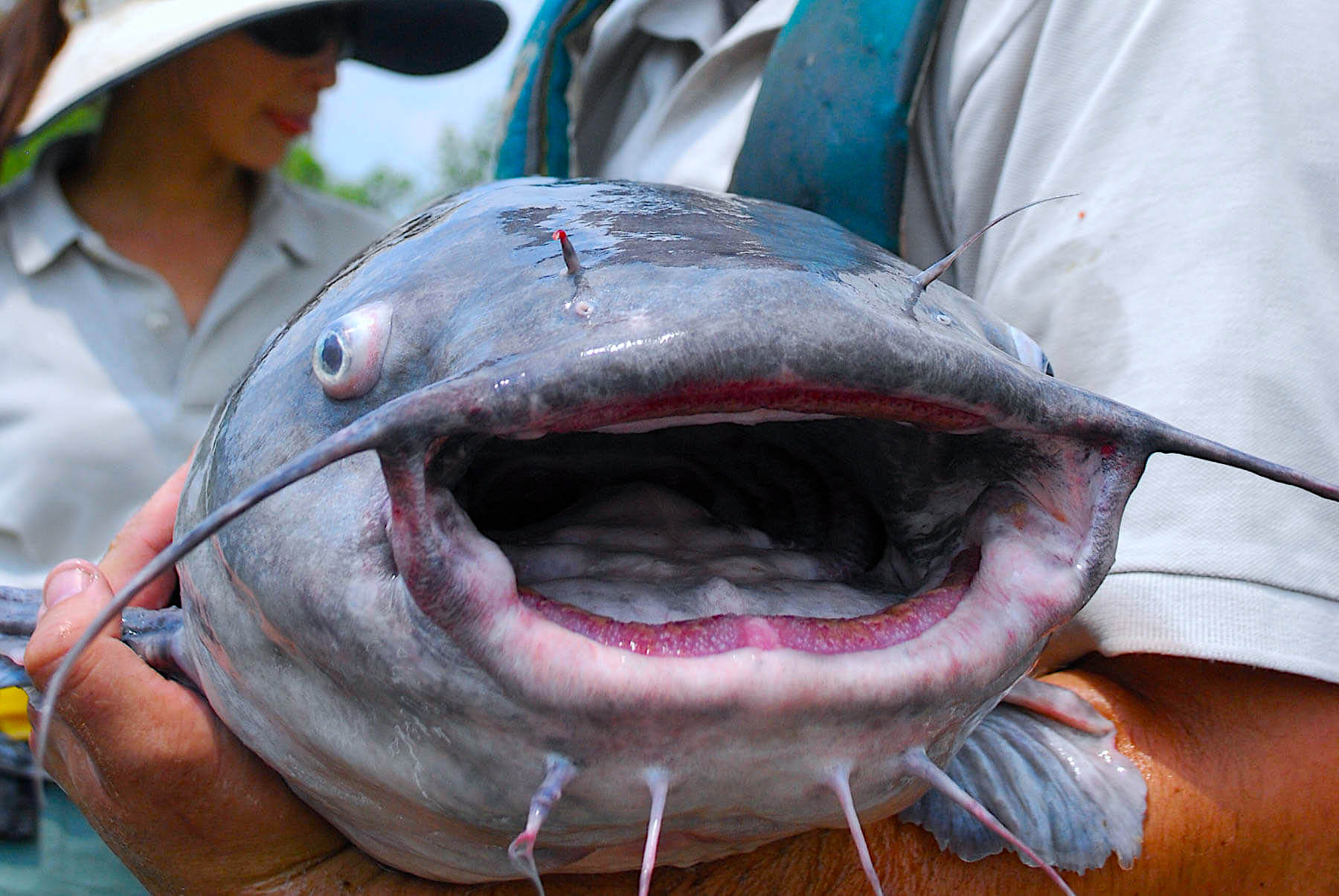

Survey responses from almost 1,000 anglers revealed that the culprits vary by region.
Research Need
Depredation — when animals eat hooked or netted fish — is a growing concern due to its economic, social, and biological impacts. There is loss of valuable catch, destruction of fishing gear, reduced quality of fishing trips, increased mortality of released fish, and even injury to sharks,, including many populations of sharks that fishery managers are trying to rebuild.
NOAA is developing a strategic plan to help identify ways to address the issue for policymakers, managers, anglers, and the public. This policy attention is actively driving a surge of new, targeted research.
Strict fisheries management and conservation laws — such as catch limits, targeted seasonal closures, and the Marine Mammal Protection Act — have successfully helped rebuild populations of top marine predators along the East Coast, including some shark species. As shark populations recover and their geography expands again, they come into greater contact with a growing number of recreational anglers.
So, which predators most often take anglers’ catch, and how does depredation affect anglers’ opinions and behavior?
What Did They Study?
Using social media, researchers surveyed recreational anglers from North Carolina to Maine between July and October 2024. To participate, anglers must have experienced depredation while fishing during the previous year.
The survey asked anglers when depredation began affecting their fishing, how they responded, what species they had targeted, how often and where depredation occurred, and which animals were involved.
The research team divided 954 responses into three distinct regions of the East Coast: Northern (Maine, New Hampshire, Massachusetts, and Rhode Island); Middle (New York and New Jersey); and Southern (Maryland, Virginia, and North Carolina). The team also examined depredation by four categories of marine predators: sharks, seals, predatory fish, and birds.
What Did They Find?
Anglers estimated that depredation occurred on nearly 20% of their catches across all three regions. They also reported sharks as the most common depredators overall (62% of responses), followed by seals (29%).
But the results differed sharply by region. In the Southern region, 95% of respondents identified sharks as their most frequent depredator. Anglers reported losing an average of almost 35% of their hooked fish to sharks.
In the Northern region, seals were the most frequent depredators (70%), although the average seal depredation rate was only 9%.
The Middle region showed a mixture of both patterns, with relatively low median depredation rates for sharks and seals.
These differences were related to the fisheries anglers targeted. Northern anglers primarily targeted striped bass and other nearshore species, while Southern anglers more often fished offshore for tunas.
What Else Did They Find?
Anglers who experienced depredation more often were also more likely to support reducing or eliminating the population of the species involved.
Responses depended on both the predator and the region. Among Northern anglers, seal depredation produced stronger negative emotions than shark depredation. Northern anglers who encountered seals were more likely to report anger, sadness, and distress, while those who experienced sharks were more likely to report awe and excitement.
However, shark depredation in the Southern region produced the strongest negative responses overall. Southern anglers reported much higher shark depredation rates and were more likely to feel angry, sad, and distressed than Northern anglers who experienced seal depredation.
This suggests that both the predators involved and the frequency of depredation can shape anglers’ reactions.
So What?
Depredation is not a singular problem with a one-size-fits-all solution. Because shark interactions in southern offshore fisheries differ fundamentally from seal interactions in northern nearshore waters, management strategies must fit the specific species, region, and fishery involved.
To do this effectively, managers must look beyond quantifiable fish loss. Tracking angler frustration, area avoidance, and shifting attitudes toward predators offers a clearer picture of how conflicts evolve.
The resurgence of shark and seal populations proves that protective measures work; however, maintaining long-term backing for these protections hinges on addressing anglers’ grievances. Anglers’ experiences will be important for developing practical, localized solutions that protect both marine ecosystems and recreational traditions.
Reading
Prasky, E. G., Casselberry, G. A., Markowitz, E. M., Griffin, L. P., & Danylchuk, A. J. (2026). Perceptions of depredation by recreational anglers in the Northeast Shelf Large Marine Ecosystem. Fisheries Research, 300, 107797.
https://doi.org/10.1016/j.fishres.2026.107797.
Lead photo: A sandbar shark takes a catch off a fishing line in Jupiter, Florida. Credit Tobey Curtis/NOAA Fisheries.
The text from Hook, Line & Science is available to reprint and republish at no cost, but only in its entirety and with this attribution: Hook, Line & Science, courtesy of Scott Baker and Sara Mirabilio, North Carolina Sea Grant.
- Categories: