Here’s how to prepare for North Carolina’s three-day red snapper season.
The 2026 three-day red snapper season in South Atlantic waters is Friday, October 9, through Sunday, October 12. The recreational bag limit is ONE fish per person per day. There are no size limits. (Additional rules apply to anglers fishing off of South Carolina, Georgia, and Florida.)
Using proper catch-and-release practices reduces waste in the fishery and leads to improved survival rates of released fish. Even a 5% increase in fish that survive, for instance, would save 100,000 red snapper each year.
As many anglers know, a fish’s swim bladder is a gas-filled organ that allows the fish to move vertically in the water column. Some fish bladders are connected to the gut and can “burp” to relieve gas pressure. Others can’t, and gas builds in the swim bladder. The bladder can double or triple in size because of a swift change in pressure, and deepwater anglers see examples of this “barotrauma” when a fish’s swim bladder balloons as they reel it in.
Fish susceptible to barotrauma include important recreational species, such as red snapper. When these fish are released — with something as large as a beach ball in their gut — they can’t swim back down. As they drift at the surface, they become easy prey for hungry predators.
If you’re lucky enough to head offshore to fish for snapper-grouper species, following the tips below will improve that fish’s chance of survival.
Rigged and Ready
Anglers fishing for snapper grouper species (which includes red snapper) are required by law to have certain gear onboard “rigged and ready” for use. This includes a dehooking tool, a descending device, and non-stainless steel, non-offset circle hooks.
Generally, fish caught deeper than 30 feet will suffer some effects of barotrauma. Signs include:
- Bloated abdominal area
- Bulging eyes and/or
- Balloon-like tissue protruding from the mouth or anus.
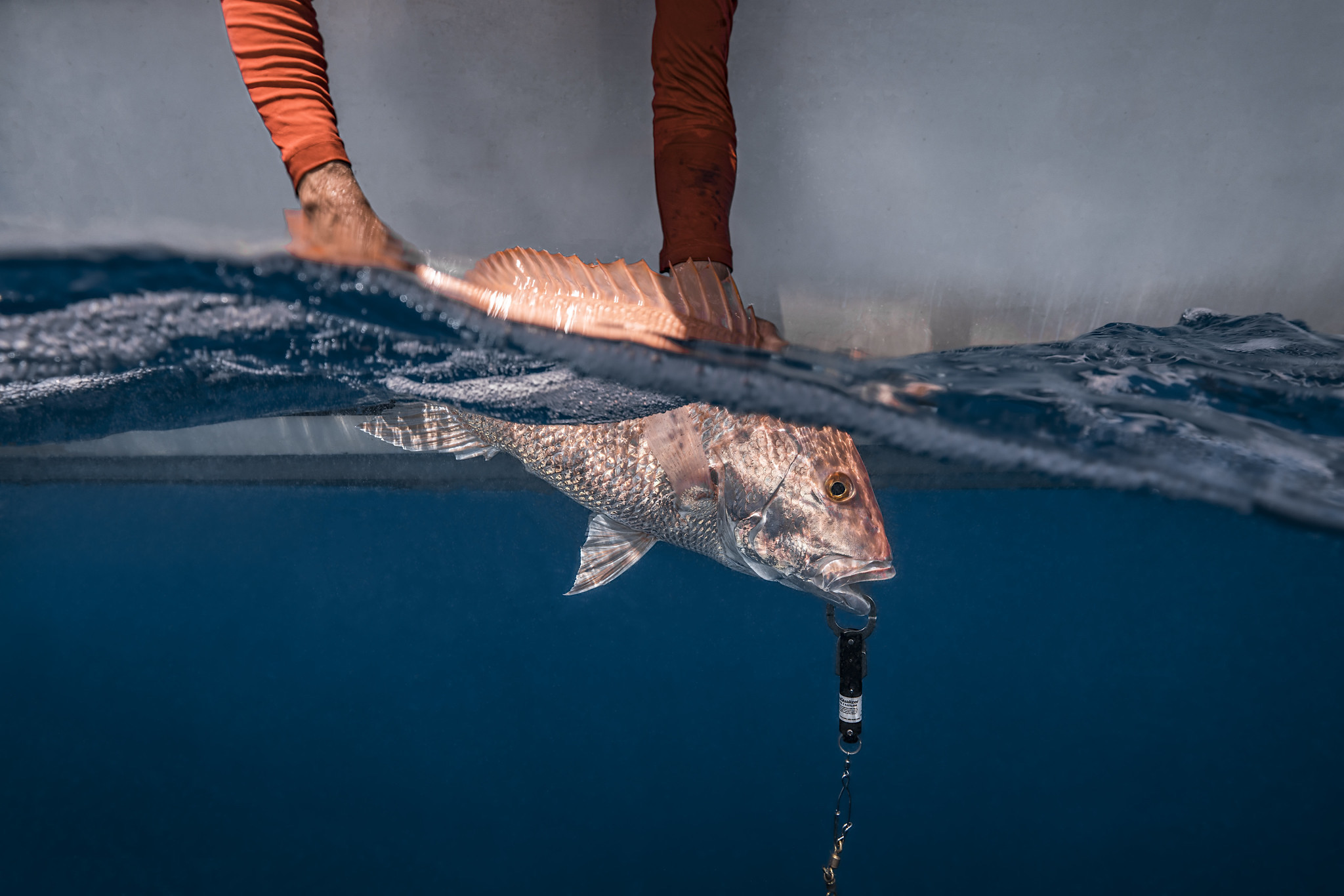
If there are signs of barotrauma, the chance of survival increases when releasing a fish through use of a descending device — a tool that returns a fish to its depth at capture, recompressing the organs. Descending devices can range from simple and cheap — weighted hooks or upside-down milk crates — to more expensive tools available on the market, such as the SeaQualizer.
Check out these How To videos.
More Tips
The South Atlantic Fishery Management Council also has provided these best practices for anglers:
- Plan Ahead: Always expect to release a fish on any trip and make sure to have the proper equipment, such as a knotless and rubberized landing net, a descending device, a dehooking tool, and circle hooks.
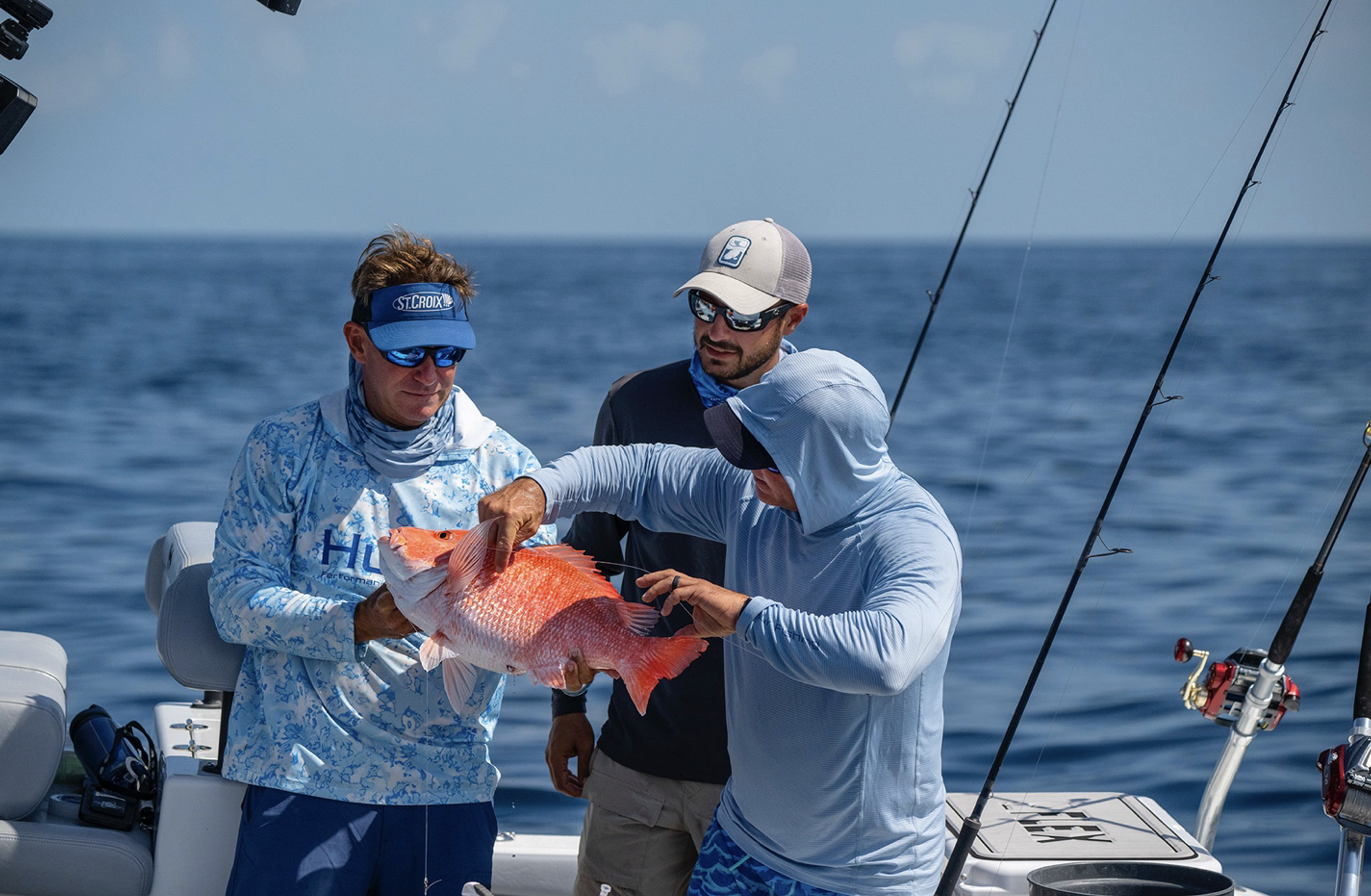
- Handling Fish: Hold fish with wet hands or rubberized gloves and make sure to support the body by holding it horizontally. Take any pictures quickly and get the fish back in the water ASAP. Limiting air exposure increases the chance of survival.
- Avoid non-target species: Develop the skills to target the size and species you desire and limit interactions with non-target species.
- Landing Fish: Don’t play fish to exhaustion in case the fish will need to be released.
Much more information on best fishing practices is also available from the South Atlantic Fishery Management Council.
Last but not least, the Return ‘Em Right program provides free virtual training for Gulf and South Atlantic reef fish anglers, who also are eligible for low-cost gear. Find out more here.
photo credit: Return ‘Em Right.
The text from Hook, Line & Science is available to reprint and republish at no cost but only in its entirety and with this attribution: Hook, Line & Science, courtesy of Scott Baker and Sara Mirabilio, North Carolina Sea Grant. HookLineScience.com
- Categories: