Hook, Line & Science
Fishing for Happiness, Blue Catfish Diets, and More
.

The Award-Winning Series with Research and News for Anglers
Can Fishing Improve Well-Being as We Age?
Researchers take a closer look at what benefits fishing could offer later in life.
Many people fish for relaxation or sport, while others fish to provide food for themselves and their families.
Recreational fishing often is a low-pressure activity that allows people to move at their own pace, alone or with others, depending on personal preference. Because it doesn’t require intense physical effort, it is especially accessible and appealing for older adults.
As we get older, staying mentally healthy matters just as much as staying physically healthy. Researchers on the other side of the globe wanted to know whether fishing might support older people’s overall well-being, and, if so, why that connection might exist.
To study this, they looked at fishing’s role in helping meet people’s three basic needs: having the freedom to make their own choices, feeling capable and able to improve at something, and having connections with other people.
What did they study?
In Yunnan Province in China, the research team surveyed 364 adults who were actively fishing when they were approached. The anglers were at least 60 years old and had also been fishers for at least a year.
The team asked participants how often they fished and how much they enjoyed it, along with questions about their overall happiness and life satisfaction. Participants also rated how much they agreed or disagreed with different experiences related to fishing, such as feeling free to choose when and where to fish, feeling capable and improving their skills, and feeling connected to others while fishing.
What did they find?
People who fished more often tended to report higher levels of happiness and overall well-being. The results showed that fishing was linked to well-being both directly and through the positive experiences people had while doing it.
The strongest link among senior fishers was the sense of freedom fishing provides — the ability to decide when, where, and how to fish. This sense of independence was the largest contributor to well-being, suggesting that having control over the activity itself is especially meaningful for older adults.
Fishing also helped people feel capable, giving a sense of progress and personal achievement over time as people were learning new techniques, choosing the right gear, and adjusting to different conditions.
Social connection was also important, although it played a slightly smaller role. Some participants benefited from spending time with other anglers, sharing knowledge and building friendships, which can help reduce feelings of loneliness. At the same time, fishing is enjoyable alone, which may explain why social connection was helpful but not as important as the sense of independence.
So what?
These findings suggest that fishing is more than just a relaxing pastime, because it may also support mental well-being as people age. Because recreational fishing encourages independence, continued learning, and social interaction, it can serve as a simple and low-cost way to support healthy aging as a complement to more traditional, medical approaches to health. Supporting access to flexible outdoor activities like fishing could play a meaningful role in helping older adults stay healthy and engaged.

What Do Blue Catfish Eat in Estuaries?
Blue catfish are spreading — and a new study sheds light on whether the species is competing with white catfish for prey.
Blue catfish have rapidly expanded into estuaries along the U.S. Atlantic coast, where these ecosystems serve as important nursery habitats for many fish and invertebrates. While the diet of adult blue catfish has been studied, very little is known about what young catfish eat in these environments.
Are these relative newcomers eating the same things that species such as the white catfish eat?
Understanding the blue catfish’s feeding habits early in its life is key to figuring out how these fish might affect other species, because blue catfish could compete for the same food sources.
What did they study?
Researchers examined the diet of 422 juvenile blue catfish, ranging from about 1.2 to 9.0 inches long, over one year, from four tidal rivers within the Winyah Bay estuary in South Carolina. The team looked at stomach contents to identify types of prey and examined how diet varied by season, location, and fish size.
Their goal was to better understand feeding patterns during the early life stages of blue catfish and how those patterns change as these fish grow.
What did they find?
About 96% of the blue catfish were 5 inches long or shorter — a far cryfrom the largest blue catfish ever caught by rod and reel in South Carolina, a 113.8-pounder in 2017.
The young blue catfish had a broad diet, including a wide range of organisms such as insects, mollusks, worms, shrimp, crabs, and small fish.
Its most common prey were small crustaceans, especially amphipods, along with crustacean fragments and isopods. Many fish stomachs contained unidentifiable material.
What else did they find?
Diet changed as the fish grew. Smaller catfish ate a wide variety of prey, while larger fish ate larger-bodied prey like crabs and mollusks.
So what?
Because juvenile blue catfish feed on many of the same bottom-dwelling organisms as species like white catfish, there is strong potential for competition in estuarine nursery habitats, which plays an important role in shaping food webs. (In fact, the population size of white catfish has been declining.)
This study provides key data that can inform evaluations of ecological impacts, as well as future monitoring and management of blue catfish in estuaries.
See also: “How Are Blue Catfish Infiltrating New Waters?”

Does Depth or Temperature Affect the Survival of Reef Fish After Release?
Ten years of charter fishing trips reveal the one factor that trumps all others.
Every year, anglers release reef fish, but some don’t survive the process. One of the biggest challenges is pressure change. When fish are brought up from deep water, the rapid drop in pressure can cause internal injuries, similar to how divers can get “the bends” if they surface too quickly.
At the same time, anglers now have the potential to target fish in deeper waters than they could previously, in part due to availability of better boats, motors, and electronics. Ocean temperatures are also gradually warming. Both trends can increase the stress on fish during and after capture.
So, is depth or temperature a bigger factor in whether fish survive after release?
What did they study?
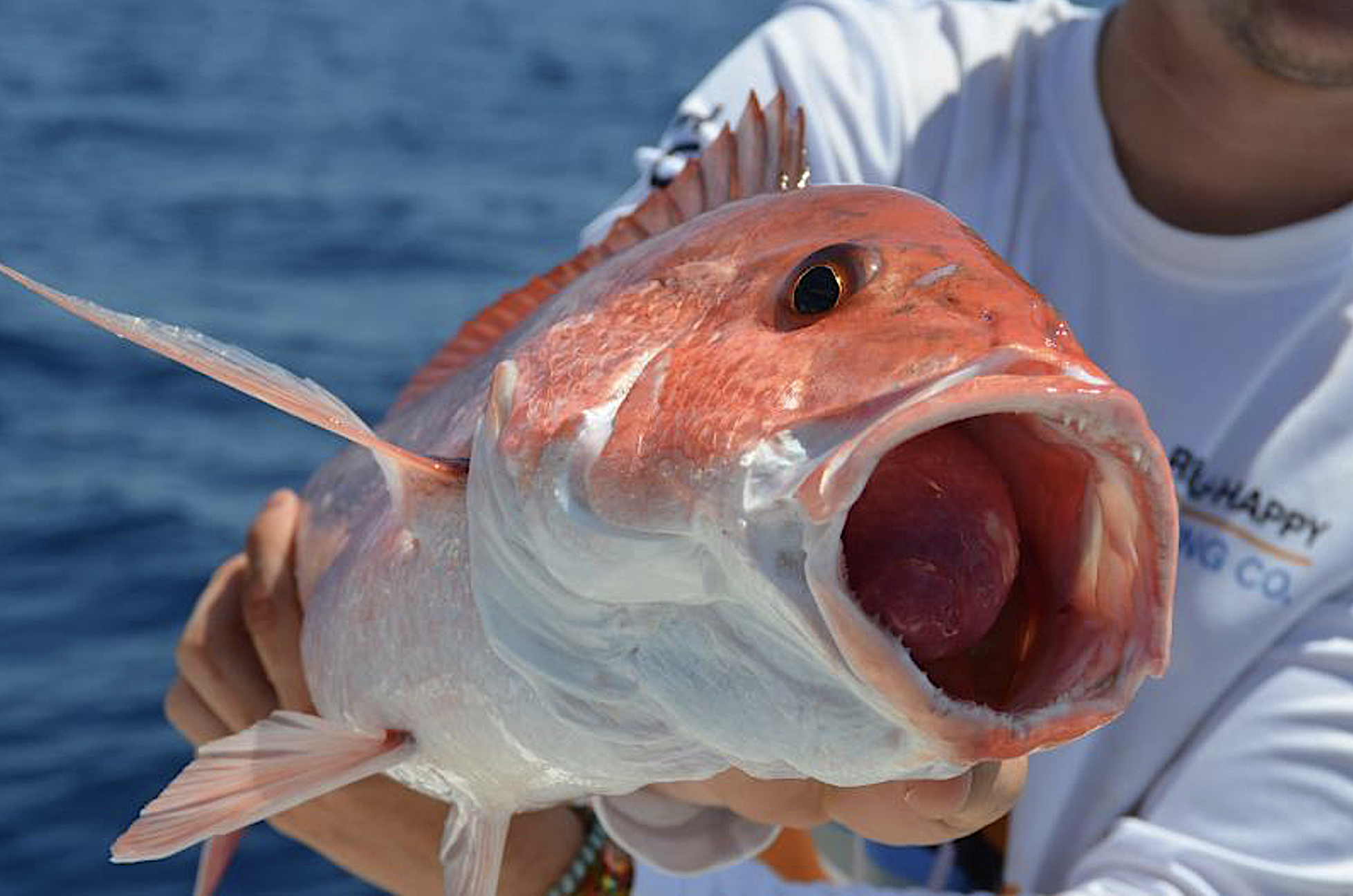
Researchers focused on five common reef fish along Florida’s Gulf Coast: red snapper, red grouper, gag, greater amberjack, and gray triggerfish. The research team used data from trained observers who joined charter fishing trips and recorded what happened when anglers caught and released fish thousands of times from 2015 to 2024.
For each fish, observers recorded the depth of the fishing location, sea surface temperature, fish size, and location of the hook. They also noted whether the fish showed signs of pressure-related injury and whether it swam back down after release. Based on these observations, the team grouped the fish by condition: good, fair, or poor.
It’s important to note that this study focused on depth and water temperature, not on the effectiveness of venting or descending devices. Anglers tend to use those tools on fish from deeper waters or on fish already showing signs of barotrauma, which makes it difficult to tell whether differences in the condition of fish before release are due to the tool, the depth, or the surface temperature.
At any rate, anglers in this study used descending devices in less than 1% of the releases, leaving too few cases to evaluate.
What did they find?
Depth stood out as the most important factor affecting how fish did after release. Across all five species, fish caught in deeper water were more likely to be in worse condition. In fact, for every species in the study, increases in depth had a stronger impact on post-release condition than similar increases in temperature.
But temperature also played a role. Warmer surface water was linked to worse outcomes for gray triggerfish, red grouper, and red snapper, but did not have a clear effect on gag or greater amberjack.
What else did they find?
Other factors also influenced how fish handled catch and release.
Larger fish of some species were more likely to be in worse condition, likely because they fight longer and experience more stress. Fish hooked in sensitive areas like the gut or gills also tended to have poorer outcomes than those hooked in the mouth. The study also looked at changes over time. By 2024, in the study area off Florida, charter anglers were fishing deeper than in 2015, often by 16 to 32 feet. Surface water temperatures also increased slightly, generally by 0.5 ̊F to 1.5 ̊F.
Over the same period, released fish were more likely to be in worse condition for most species. Charter fishers had gradually moved offshore, in part because of the depletion of reef fish closer to shore.
Season mattered as well. For several species, the highest risk of poor condition after release occurred during the warmer months, especially from June through September.
So what?
This study shows that where and when you fish can make a real difference in whether released fish survive. Fishing in deeper water increases the risk of pressure-related injuries, and warmer temperatures can add additional stress for some species.
For fisheries managers, these results suggest that adjusting fishing seasons or considering depth-related guidelines could help reduce post- release mortality.
For anglers, the study highlights the importance of being aware of depth, temperature, and handling practices when releasing fish.
Most importantly, we know from previous research that when fishing for reef fish in the South Atlantic, anglers should be rigged and ready with a descending device for recompressing their fish after release.
See also: “How Descending Devices Can Save North Carolina’s Reef Fish”
Mason Ibrahim is a contributing editor for Coastwatch and the communication fellow for North Carolina Sea Grant’s award-winning Hook, Line & Science series.
Read more at HookLineScience.com.
- Categories: