The Disease Detective
Tracing the Spread of Parasites
.
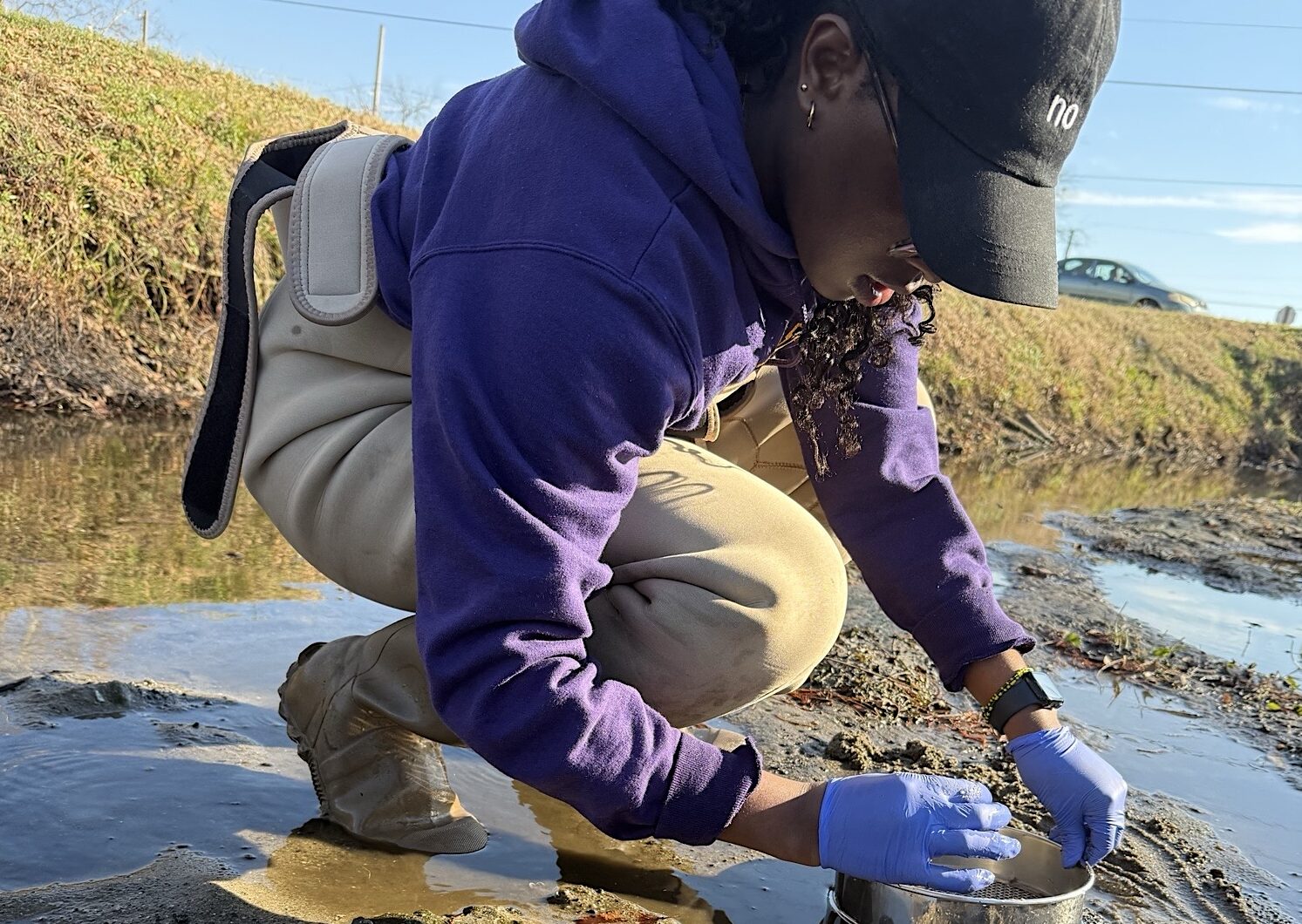
Glory Kidimbu investigates the transmission of parasitic pathogens to waterways.
For centuries, people have brought plants and animals to new places, intentionally or unintentionally. Sometimes these new species harm the surrounding environment, jeopardizing the health of other plants and animals, or even creating human health risks.
Freshwater golden clams (Corbicula fluminea) came to North Carolina in the early 1970s, likely from the West Coast, where fishers have cultivated them for bait since the late 1930s. Today golden clams inhabit streams and lakes across our state. Although it isn’t entirely clear how the clams came to the United States, according to the U.S. Fish and Wildlife Service, their presence is the result of human action.
Golden clams are an eco-harmful species because they outcompete other clams for food and space. However, “they also have a history of being bioindicators for human pathogens,” says Glory Kidimbu, a Mountains to Sea Fellow with North Carolina Sea Grant and the NC Water Resources Research Institute. Bioindicators are living plants, animals, and microorganisms that can be used to screen and monitor the health of an ecosystem.

Clams and other bivalves — such as oysters, mussels, and scallops — eat by drawing water into their gills, trapping plankton and algae. Because they are constantly and nondiscriminately taking in water, the health of clams is an indicator of the health of the surrounding ecosystem.
In the past, scientists have used golden clams to indicate if viral pathogens are present in the water, such as Avian Influenza. Kidimbu is currently investigating their potential for tracking parasitic pathogens as well.
Parasitic Pathogens
Specifically, Kidimbu is investigating the parasites Cryptosportum parvum and Toxoplasma gondii in the water and soil that golden clams inhabit, as well as in the clams themselves. Both parasites are protozoa — animal-like, single-celled organisms that live in and survive off a host organism. Although C. parvum and T. gondii are relatively common on land, storms and floods sometimes carry these parasites into waterways.
Both parasites can bring human health risks.
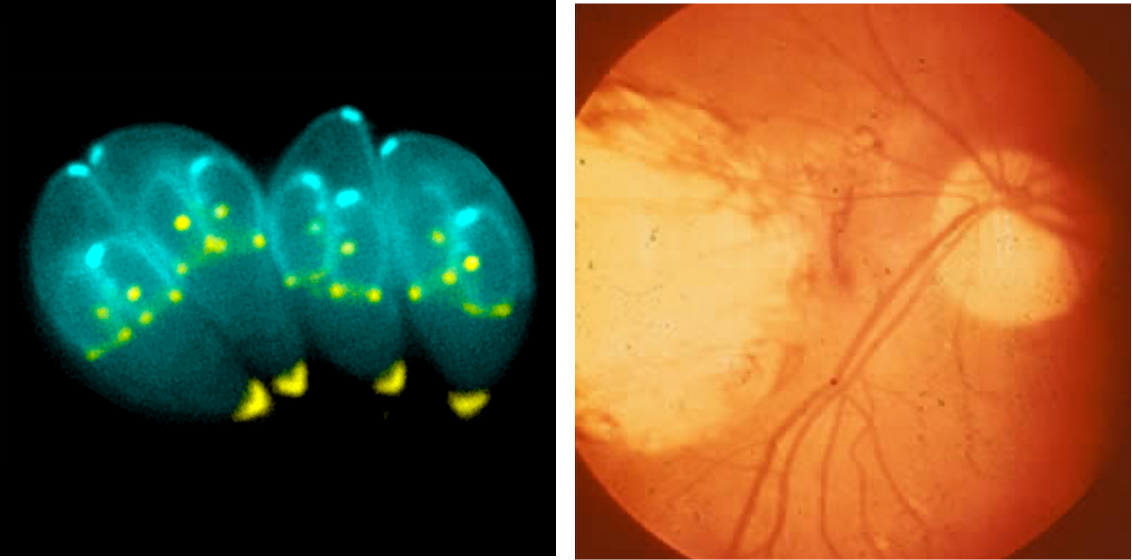
C. parvum causes the infection Cryptosporidiosis (“crypto”). According to the Cleveland Clinic, there are an estimated 700,000 Crypto cases annually in the United States. Symptoms include low fever, nausea, diarrhea, stomach pain, and other gastrointestinal symptoms that often resolve on their own in healthy adults. Children and immunocompromised adults are at greater risk for severe and prolonged symptoms.
T. gondii causes toxoplasmosis (“toxo”), which often has no symptoms, although healthy adults may experience mild flu-like symptoms, such as fever, swollen lymph nodes, and muscle aches. Even if the symptoms go away within a few weeks, T. gondii stays in the body in an inactive state, and the infection can reactivate in a weakened immune system. According to the Centers for Disease Control and Prevention (CDC), over 40 million people are infected with toxo in the United States.
One of the greater dangers of toxo is for a mother during or just before becoming pregnant, in which cases the parasite then can transfer to the fetus and cause infection. According to the CDC, this raises the risk of miscarriages, still-born children, and physical complications for newborns, as well as vision loss, seizures, and mental disabilities later in life.

From the Land to the Water
Previous researchers have found DNA of both C. parvum and T. gondii in various aquatic animals, but how these animals become infected is still unclear. Kidimbu is investigating whether golden clams can provide the much-needed answers about the origins of these pathogens and their transmission in aquatic environments.
“There are definite hosts, such as cats for toxo,” she says. “But these hosts are not living in the water or interacting with aquatic wildlife. So, what we are trying to figure out is what is causing this. What is the connection between terrestrial and aquatic transmission of pathogens?”
On land, these parasites spread through the consumption of improperly prepared, contaminated meat, or by coming in contact with feces from an infected animal. Kidimbu’s hypothesis is that precipitation, which is becoming more intense and more frequent in North Carolina, is washing higher concentrations of contaminants into the lakes and rivers, causing an accumulation of these parasites. Because “golden clams are able to reproduce really fast, and filter water really fast,” she adds, the clams could show if pathogens are present and also explain the spread of the parasites.
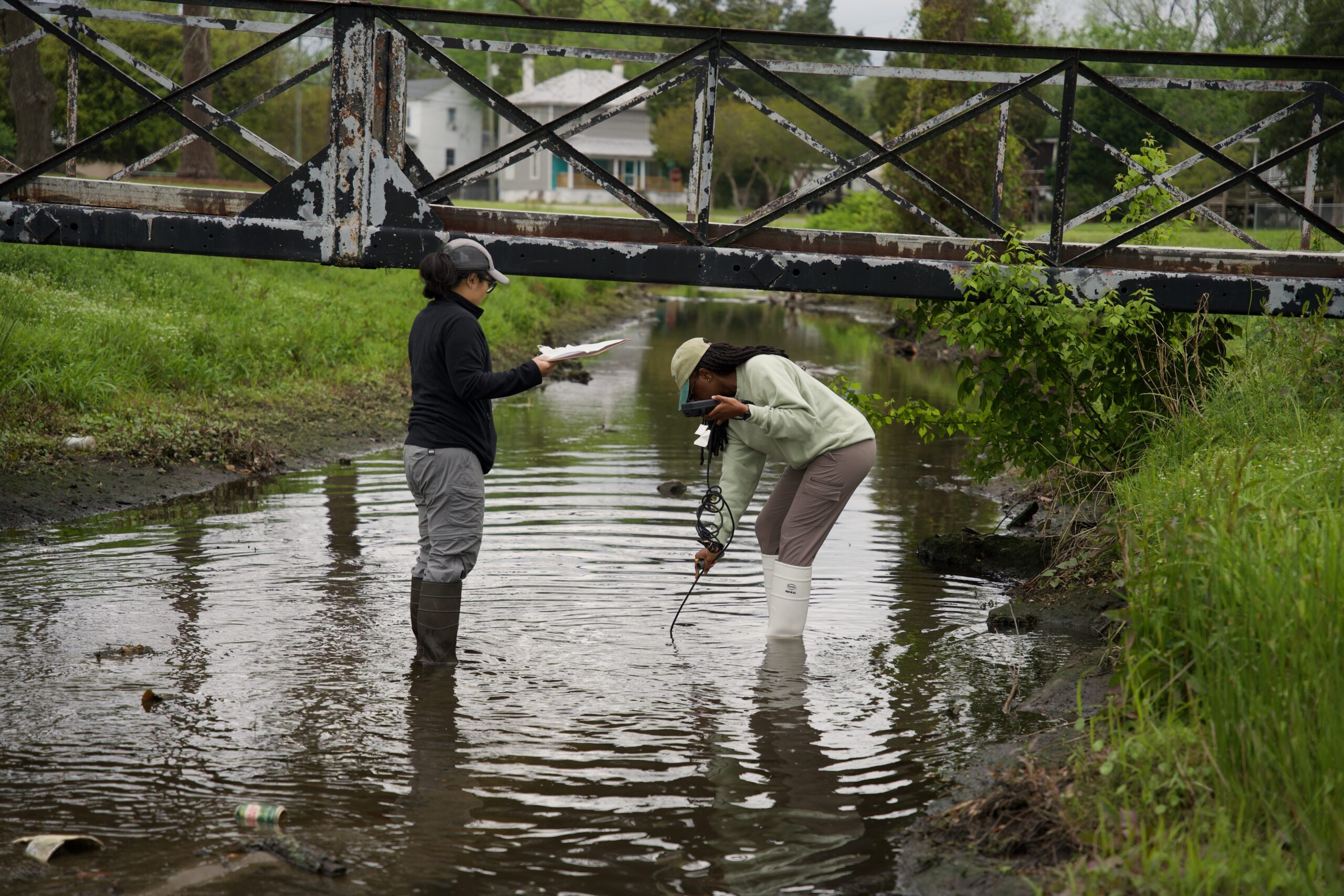
Currently she is sampling across the Tar-Pamlico watershed. The results are still preliminary, but she has seen positive results for C. parvum in soil, water, and clams. However, her results for T. gondii have been a bit more perplexing.
“We’ve only seen it in a soil sample,” says Kidimbu. She calls it a “picky pathogen,” because it tends to accumulate in low concentrations and in localized areas. “This doesn’t mean that T. gondii isn’t present, but rather that we simply need to take a lot of samples to know anything for sure.” However, even in low concentrations, exposure to T. gondii can result in symptoms of an infection.
“Obviously, we can’t collect the entire Tar-Pamlico watershed,” joked Kidimbu. “So, we are looking to do some in-lab experiments for T. gondii.” She says she plans to “spike” water with T. gondii in the lab and test if the clams host this parasite, like they are able to host C. parvum.
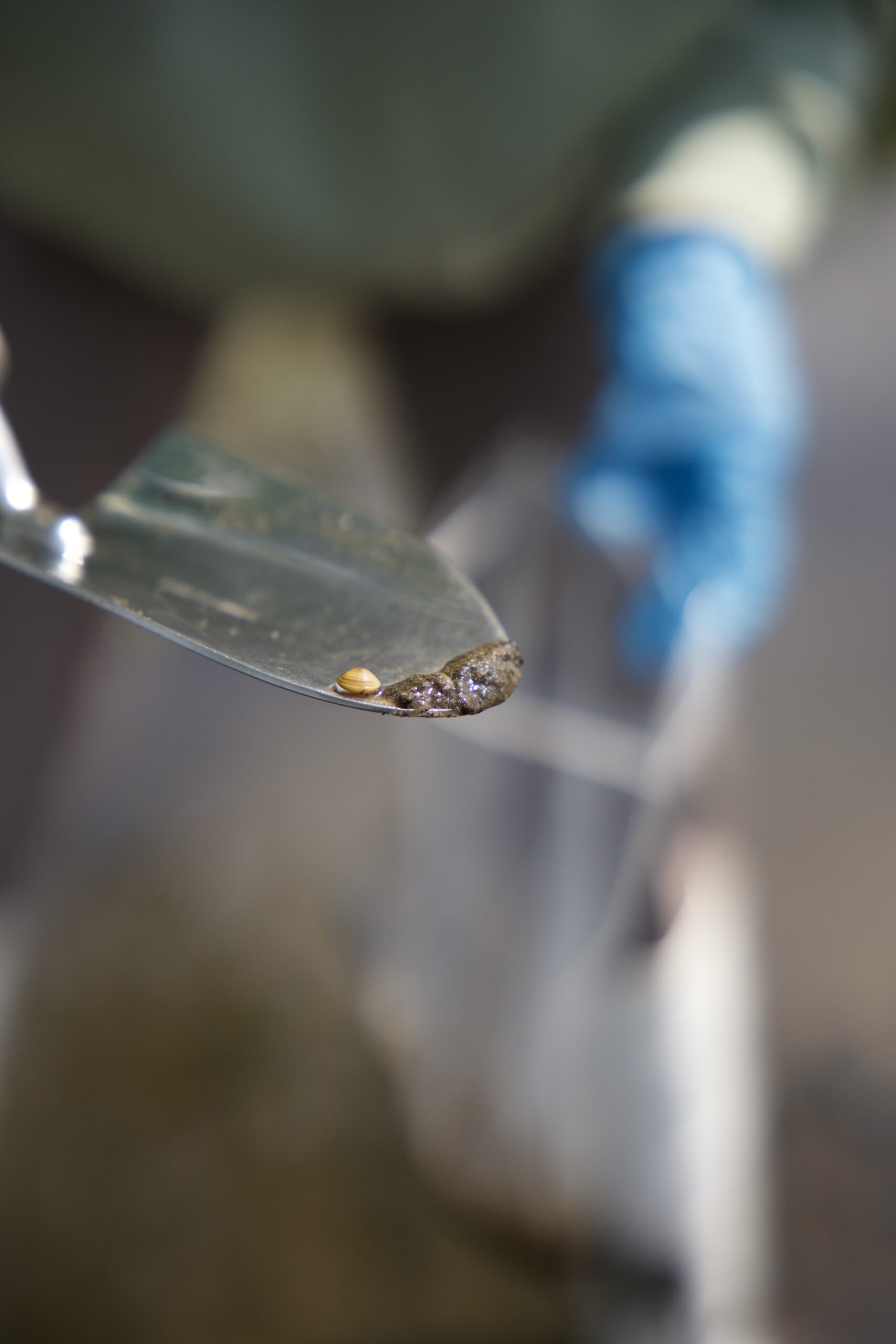
“We are testing whether the clams can filter the parasite and if the clams are able to retain that parasite,” she explains. “Once we have confirmed answers to those questions, we can better gauge what could be the reason for these low positive environmental samples, especially since there are cases of other species of aquatic wildlife being infected with toxo.”
If golden clams prove to be a reliable source of information on new patterns of transmission for the parasites, the clams could be useful in creating new surveillance efforts to protect the health of humans, wildlife, and the environment.
“As we are seeing more emerging pathogens, it raises the question of how we can better protect ourselves,” says Kidimbu.
Water quality experts often test for a single pathogen or, as she says, “a certain amount of concerns. But a lot of emerging pathogens are not tested for because they are emerging and often understudied.”

Human Origins
Kidimbu emphasizes that this study is more than an investigation of emerging pathogens but is also a look at how human activity — such as introducing new species like golden clams — and shifts in the environment can have a direct impact on changing how pathogens spread through our communities.
“Environmental health is connected to both animal health and human health,” says Kidimbu. “When one part of this triad is being negatively impacted, it impacts the others. What you do isn’t isolated. So, it is important to be intentional.”
More from Coastwatch on promoting healthy ecosystems
Lily Soetebier is a contributing editor for Coastwatch and an award-winning science communicator at North Carolina Sea Grant. She is pursuing an M.S. in technical communication at North Carolina State University.
lead photo credit: Rianna Mancera


