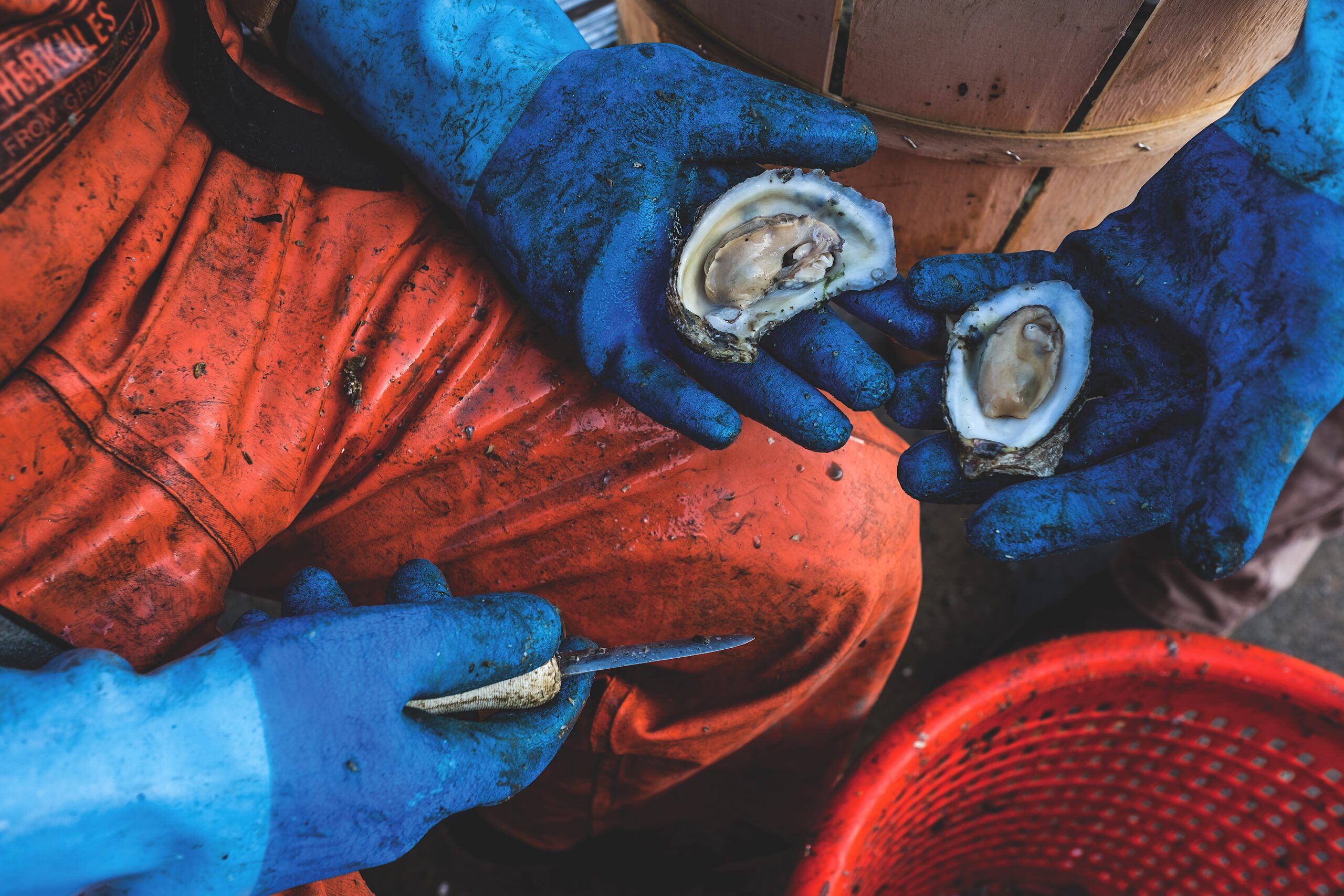
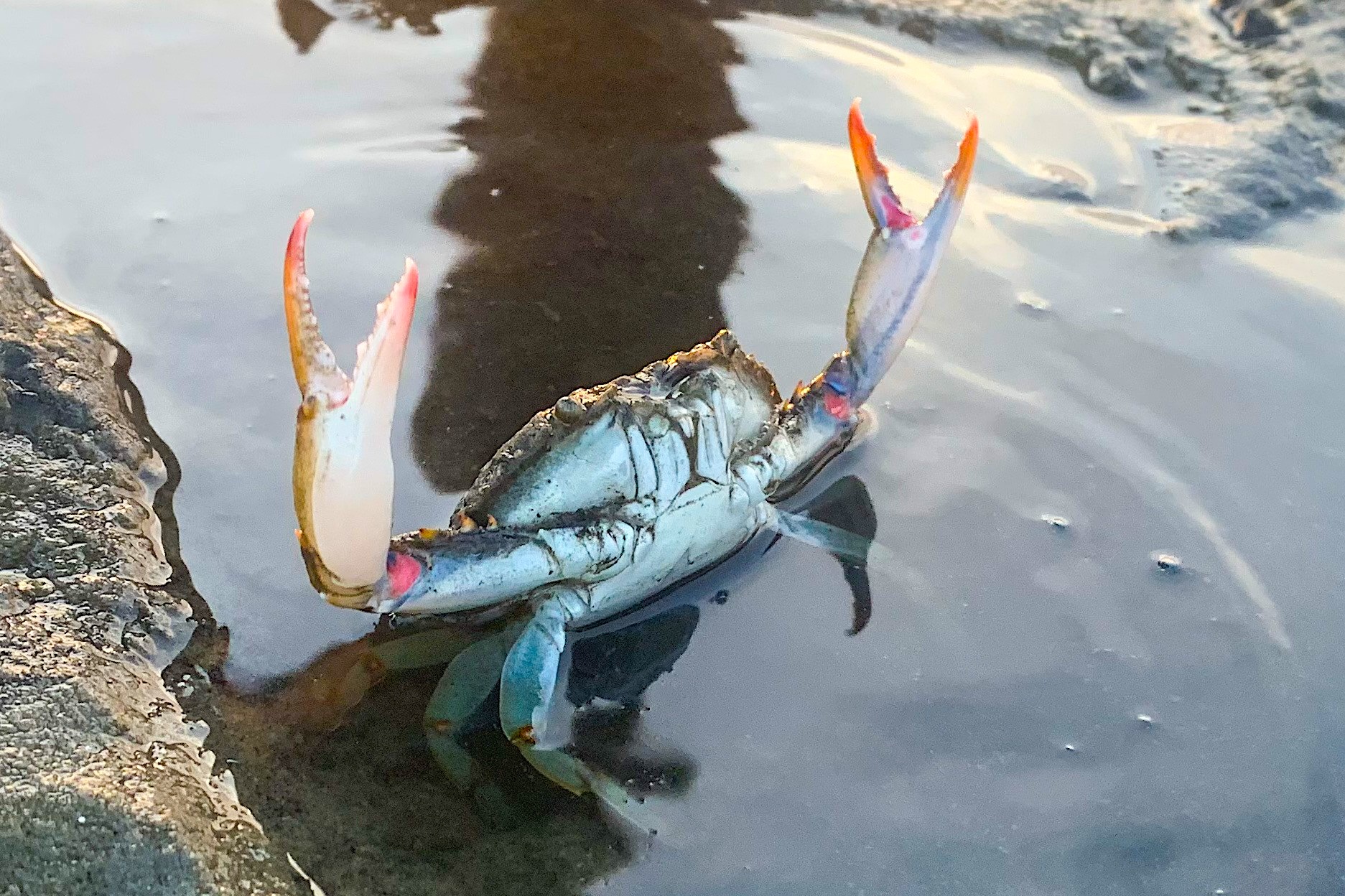
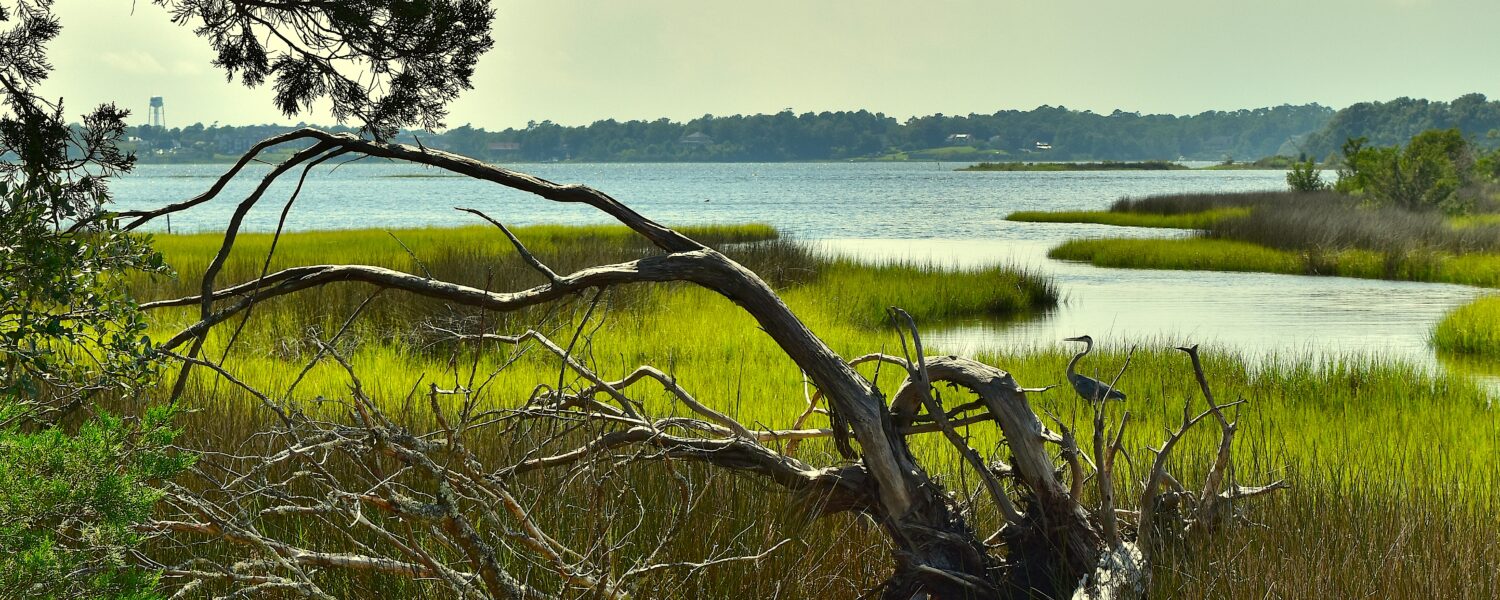
North Carolina Sea Grant and the NC Coastal Federation are collaborating on a bold project to accelerate growth of the state’s farmed shellfish industry.
Along North Carolina’s shorelines, shellfish farmers are helping to cultivate more than just seafood. They are growing jobs, protecting fragile coastal ecosystems, and reviving a cultural legacy deeply rooted in the state’s coastal waters.
North Carolina is home to over 1.4 million acres of coastal waters with biological and physical characteristics that make it uniquely well-suited for shellfish mariculture. The state’s long history of shell fishing, combined with skilled commercial fishers and ready-to-use equipment, creates a strong foundation for a thriving mariculture industry.
However, chronic overharvesting, diseases and pollution have repeatedly set back the industry. Recognizing the sector’s potential and challenges, the North Carolina General Assembly in 2018 commissioned the state’s first Shellfish Mariculture Strategic Plan, setting the ambitious goal of growing the shellfish business to $100 million in overall economic impact ($33 million in farmgate value) and creating 1,000 jobs by 2030.

In a new collaborative effort, North Carolina Coastal Federation and North Carolina Sea Grant have developed a strategic project to help the industry achieve this ambitious goal by 2030. The new project encompasses several critical initiatives.
First, the project will update the North Carolina Shellfish Mariculture Strategic Plan to address emerging siting challenges for the industry by examining the placement of shellfish aquaculture in Pender and Onslow counties. Input from community members will inform the mapping of key areas, identifying and helping to resolve conflicts, as well as clarifying “public trust water uses” (waters legally protected for public benefit).
“We will facilitate focus groups with different users of the public trust waters, including shellfish farmers, charter boat fishers, recreational boaters, and people who live along the water’s edge to provide detailed maps about potential user conflicts,” says Jane Harrison, North Carolina Sea Grant’s coastal economics specialist, who leads this part of the project.
Harrison also leads efforts to expand outreach and education through the North Carolina Oyster Trail, building public awareness and economic opportunities. The Oyster Trail represents over 90 coastal and inland sites across the state where visitors can learn about, eat, and explore the environmental dimensions of shellfish.

“We are going to be able to promote the sites that are on the Trail to ensure that more people across the state are aware of where they can buy local shellfish and also how they can contribute to a healthy environment that allows shellfish to thrive,” Harrison explains.
Several years ago, Harrison developed a needs assessment for a shellfish mariculture hub by conducting interviews with industry leaders about where to locate it, how to manage it, and what services it should offer. Now, North Carolina Coastal Federation’s chief program officer, Ana Zivanovic-Nenadovic, will lead the project’s efforts to enhance operations and management of a brand-new Shellfish Mariculture Hub in Carteret County and to develop a Mariculture Hub business model.
The new hub addresses three critical challenges that have limited the growth of North Carolina’s shellfish mariculture industry: the lack of access to water for vessel launching, harvest transport, and equipment cleaning; the lack of cold storage and refrigeration facilities required to maintain product quality and safety; and the lack of dedicated workspace for gear storage and product processing.
“This hub is truly unique, and likely the first of its kind in the country,” Zivanovic-Nenadovic says, adding that its uniqueness is in “the innovative structure of its ownership, funding, and management.”
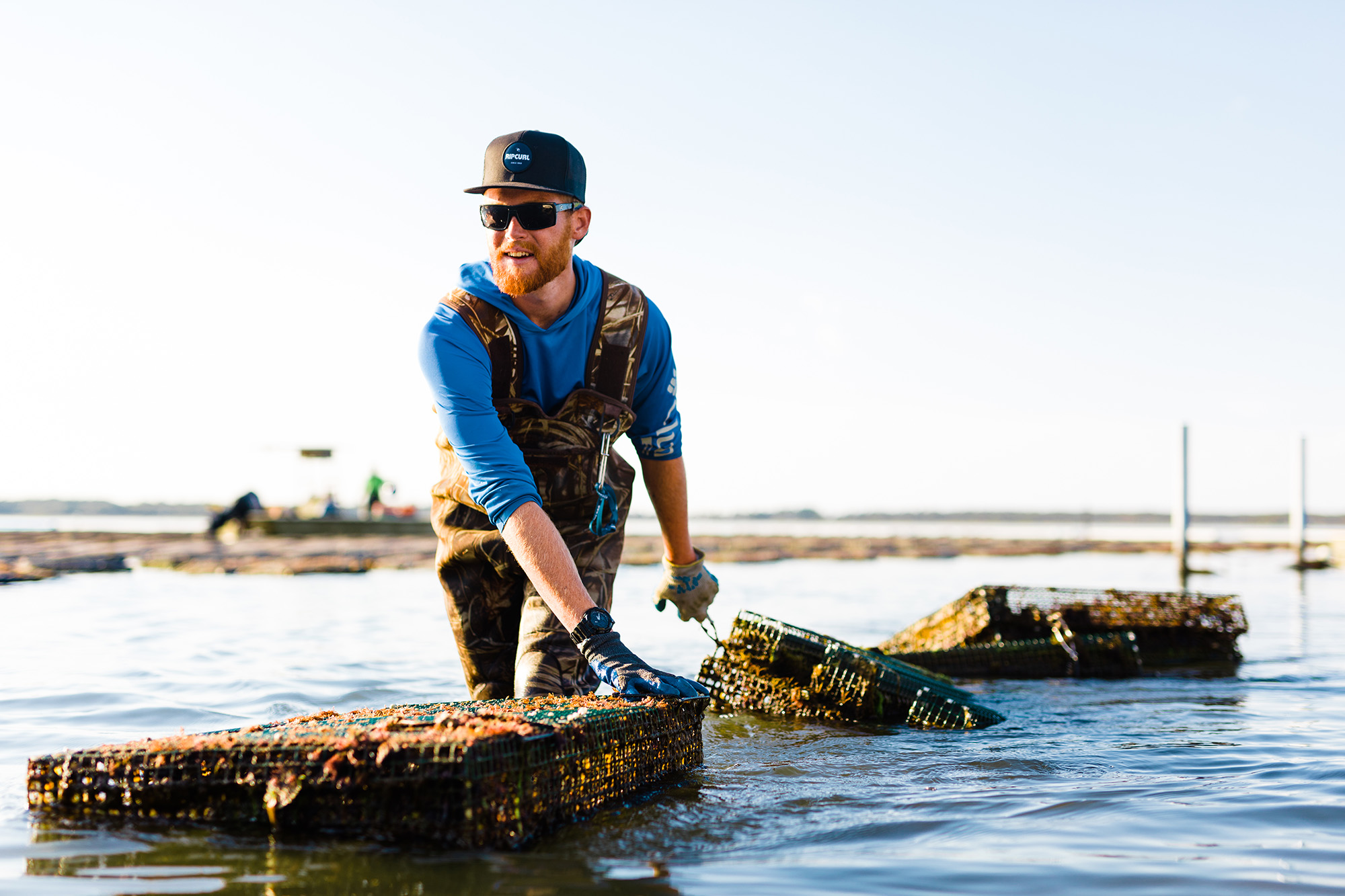
The collaborative model not only solves long-standing logistical barriers, she adds, “but also establishes a scalable model for how local governments, nonprofits, industry, and funders can partner to support sustainable aquaculture growth.”
Zivanovic-Nenadovic also says the Mariculture Hub will involve assembling a stakeholder group, led by UNC Wilmington marine biologist Ami Wilbur, to “forge a path forward for establishing a commercial hatchery in North Carolina.”
The project builds on long-term collaboration among state agencies.
“What excites me most is the uniqueness of partnership and the blend of economic development with ecological outcomes — a goal that the Coastal Federation has been working toward over the past four decades — showing that economy and ecology do not need to be at odds,” Zivanovic-Nenadovic says. “It’s proof that you can grow a modern, competitive industry while improving the health of the coast. That’s a message the entire state can be proud of.”
Harrison agrees the project is about much more than seafood.
“I want the shellfish aquaculture industry to have the opportunity to grow more oysters, reduce pressure on wild stocks, and provide jobs and meaningful livelihoods,” she says, “while providing that delicious local seafood to our state.”
more on fisheries and aquaculture
lead photo credit: Justin Kase Conder, © 2024 Justin Kase Conder, usage with express permission only.
Emma Davies is an award-winning journalist and a contributing editor for Coastwatch. She is pursuing a masters of arts in liberal studies at NC State University, with a concentration in communication and genetic engineering.
- Categories: