Two hurricanes and a global pandemic exposed the need to support students struggling with upheaval. Researchers at Duke University and NC State collaborated with educators and others on a Sea Grant project to guide middle schoolers through turbulent times.
On a blue-sky Saturday in March 2025, a group of young children and adults have gathered in a small, open-air shed at the Museum of Life and Science in Durham, waiting for the entertainment to begin.
“Puppet show in the barnyard in five minutes! Come see it while you still can!” calls an older girl, clad in a blue-and-white tie-dyed T-shirt, to museum goers on a nearby footpath.
In the shelter, a teenager wearing a matching tie-dyed shirt stands at a small lectern, flanked by several peers in like attire. He first introduces his team — students from Broad Creek Middle School in coastal Carteret County, North Carolina — then presents the show: “It’s a story called Teddy and the Trash Monster.”
The drama unfolds over five or so minutes as several student puppeteers maneuver animal cutouts from behind a backlit screen while others provide narration. The plot goes something like this: A turtle named Teddy befriends a gaggle of wetland creatures determined to vanquish a vile glob of plastic detritus that has been terrorizing their habitat.
This shadow puppet show is just one of several student creations on temporary exhibit at the museum as part of Creek Week, an educational event celebrating local waterways. At another booth, a phalanx of colorful finger-puppet snails appears attentive with googly eyes and grins. Nearby, a gallery of drawings depicts fish enwreathed with phrases describing traits like “self-awareness” and “mental agility.”

The students’ source of inspiration is a book of fables — stories with a lesson — about animals and plants persevering through challenging ecological and social situations. In one fable, for example, a marsh snail survives high tide after heeding sage advice. In another, a snapper teaches a grouper to become self-sufficient after family tragedy.
The fables are central to Ready, Set, Resilience, a middle school program designed to help kids navigate communal and personal hardships, be they natural disasters or relationship struggles. Born from a unique collaboration — comprising faculty, staff and students from the Duke University Nicholas School of the Environment and North Carolina State University, resilience practitioners, and other North Carolina educators — the program also includes lesson plans and complementary activities modifiable for different ages and educational settings.
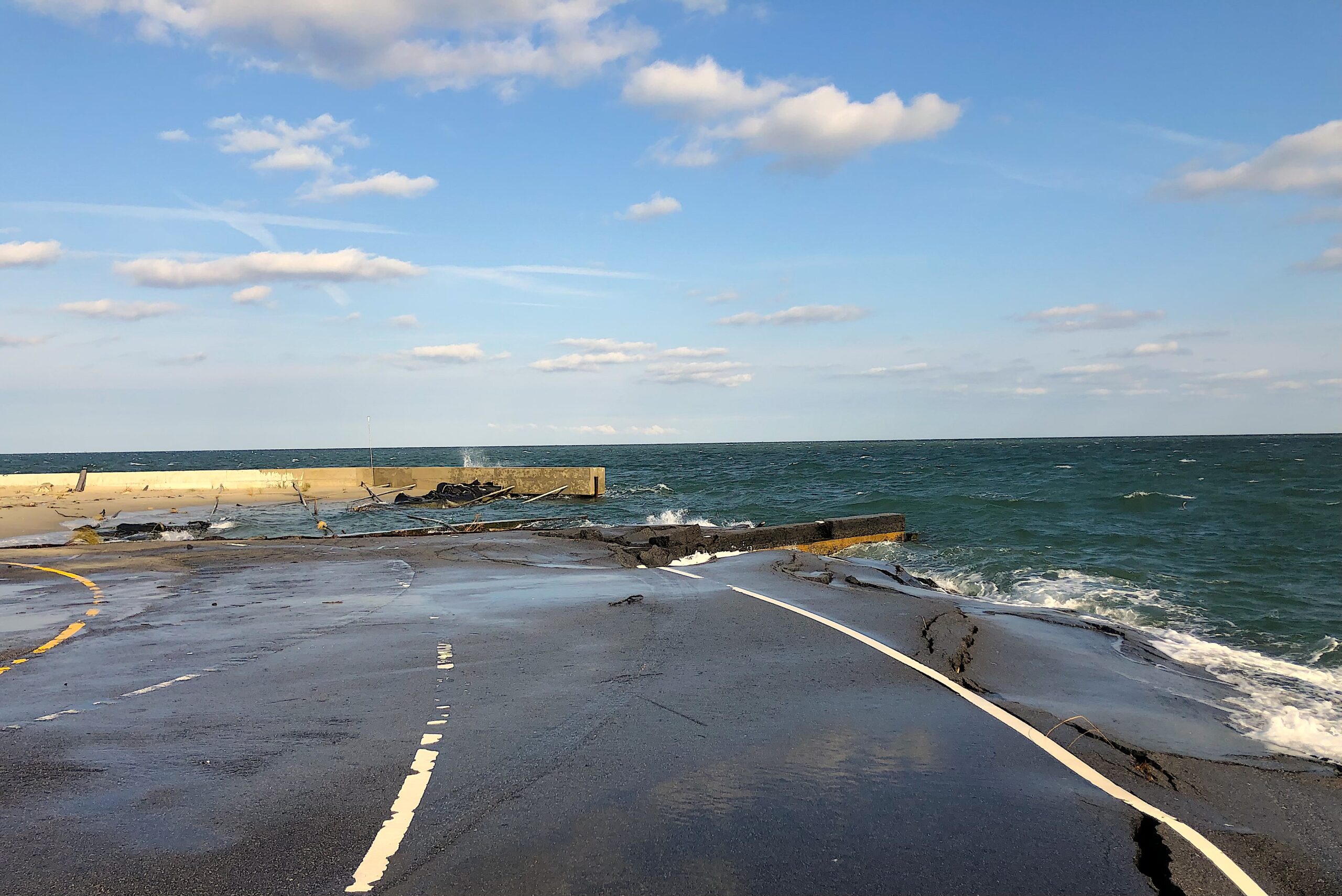
First piloted in Carteret County in 2022, Ready, Set, Resilience has expanded to six counties across the state, including areas devastated by Hurricane Helene in September 2024. This momentum reflects a growing need to support students through various crises that disrupt lives and learning. It’s also a testament to the dedication of North Carolina teachers who have been instrumental in shaping Ready, Set, Resilience into a versatile program that benefits kids and adults alike.
“As an educator, this is the most impactful thing I’ve ever seen implemented,” says Robert Condie, an eighth grade English teacher at Broad Creek Middle School, who mentored the shadow puppet show team. “I’ve never seen a program like this change not only the students, but the faculty and the energy of a campus and, personally, me. I feel like a better person just being a part of this.”
Origin Story
In the fall of 2020, as coastal communities gripped by the pandemic were still recovering from damaging hurricanes in 2019 and 2018, the Duke Marine Lab in Beaufort, North Carolina, received a unique request from the local Boys and Girls Club. Personnel were concerned that kids in the club’s afterschool program were suffering from the prolonged disruption to normal life. Could the Marine Lab help?
“What they wanted were [Marine Lab] students to come and mentor their kids in a way to support the kids socially and emotionally,” says Liz DeMattia, a research scientist with the Nicholas School and director of the Duke Marine Lab Community Science Initiative, who co-leads Ready, Set, Resilience.

University students from the Marine Lab had traditionally assisted with science-based programming at the afterschool program. To qualify as mentors, they would need additional training, so DeMattia sought expertise from Patrick Jeffs, a former trauma therapist and founder of a consultancy called The Resiliency Solution.
Together, DeMattia and Jeffs developed a series of mentorship training workshops on resilience. To drive home the concept, they challenged the Marine Lab students to draw examples of nature bouncing back from disturbance. The students’ examples — a sea star regenerating a lost limb, for example, and new growth emerging after a forest fire — astounded the workshop leaders.
“What they came up with was so beautiful,” DeMattia says. It dawned on her: Weaving examples of nature’s resilience into fictional stories could be a powerful teaching tool.
Beyond providing entertainment, stories can help kids process difficult experiences and emotions from a “psychologically safe distance,” says Kathryn Stevenson, director of the Environmental Education Lab at NC State and co-leader of Ready, Set, Resilience.
Telling a tale set in nature through animal and plant characters — typical protagonists in classic fables — adds an extra layer of comfortable distance. “When they’re able to see characters deal with adverse experiences and display resilience, kids are able to better understand what these skills are and build them without having to engage so deeply with their own personal experiences,” Stevenson explains.
Creating the fables that now anchor Ready, Set, Resilience was a group effort led by former Marine Lab community engagement fellow Aurora McCollum. McCollum, who has a master’s degree in environmental management from the Nicholas School, recruited several undergraduates enrolled in a service-learning program called DukeEngage to help her pen plotlines.
Ultimately, McCollum and her cowriters produced nine stories, now available in a book called Bend in the Wind: A Collection of Nature Fables. Through lively dialogue and narration, the fables explore six qualities fundamental to personal resilience — mental agility, connection, self-awareness, self-regulation, optimism, and strength of character — through an ecological lens.

The first story, by McCollum, is a fitting introduction to a familiar North Carolina scenario: a hurricane. McCollum imagines a live oak named Quint enduring powerful winds by relying on encouragement from seasoned elders, as well as deep roots and a twisted shape — traits that keep live oaks from toppling.
“Live oak trees are really well adapted to thrive in hurricane-prone environments,” explains McCollum, who recently published a paper tied to her work with Ready, Set, Resilience. “I thought that that translated really well into what we were trying to do [with the fables].”
Since their debut, the fables have spurred a flurry of creative output. Ready, Set, Resilience programming now includes a suite of lesson plans aligned with North Carolina educational standards, as well an activity booklet with mental and physical exercises for centering mind and body. Although the materials build off scholarship in positive psychology — a field centered on well-being — DeMattia and Stevenson both emphasize that the program is not intended to replace formal therapy.
“We can’t expect teachers to have that special training, but we can support them with activities to decrease stress and increase self-awareness and increase self-control — those soft skills of personal resilience,” DeMattia says.
“Sometimes it’s gonna be a hurricane, but sometimes it’s gonna be your friends mad at you,” Stevenson adds. “In middle school, that can sometimes feel really big.”
Adaptive Traits
Robert Condie, the English teacher, first heard about the nature fables as students were settling back into classrooms after months of hybrid schedules. Life was hectic, so he was hesitant to try a new program. But then he read the story about Quint the live oak bending, not breaking, in the hurricane. “It moved me to say yes,” Condie recalls.

He now uses Ready, Set, Resilience to teach the hero’s journey, a literary archetype that involves an individual on a transformative quest. The fables are seamless tie-ins, not just for their emphasis on personal resilience — a hallmark of the classic hero — but for their narrative structures and character development, Condie says.
Other teachers have similarly adapted the curriculum to their respective subjects.
In Matthew Turpin’s science class at Morehead City Middle School in Carteret County, the fables help contextualize ecological concepts. For example, a tale about a tree named Terry is a door to learning about mycorrhizal networks. These underground fungal systems facilitate chemical signaling and nutrient-sharing among roots from different trees, improving tree resilience to drought and pests. In the fable, Terry eschews this communal sharing, preferring to hoard resources. When he receives help after falling ill, Terry apologizes for his selfish behavior.
At Sherwood Githens Middle School, part of Durham Public Schools, Nelly Basile uses the fables to teach her English language learners new vocabulary. The students become more engaged seeing words like “evacuation,” “storm surge” or “recovery” in stories about natural disasters they may have experienced in their home countries, according to Basile.
“It’s a more vivid lesson when you incorporate [vocabulary into] scenes that they can actually relate to,” Basile says. When a word is isolated, “it doesn’t mean anything to them.”
The utility and flexibility of Ready, Set, Resilience reflect the diverse expertise of its architects. North Carolina educators collaborate with Duke and NC State researchers, staff and students on program development, implementation and adoption.
“What has been most eye-opening for me is that no matter what we create, amazing teachers take it in and are able to modify it for their needs and their students,” DeMattia says.

Periodic workshops run by Ready, Set, Resilience team members provide designated time for teachers to offer feedback on what works and what doesn’t.
“None of the curriculum is given to the teachers [with the instruction] ‘You must do this.’ It’s ‘What are your ideas?’” says Sarah Spiegler, coastal resilience specialist for North Carolina Sea Grant. “The teachers actually test the curriculum in the classroom, and they come back and they make changes to it, and they tell the researchers, ‘This worked’ or, ‘This didn’t work.’ And so it’s very iterative.”
North Carolina Sea Grant is a primary funder of Ready, Set, Resilience, along with the Nicholas School, the Marine Lab, the Duke Office of Community Affairs and NC State’s Kenan Fellows Program. Additionally, as part of a Duke Bass Connections project with DeMattia, associate professor of the practice of Theater Studies Torry Bend is creating new ways to explore resilience through the use of puppetry.
As Nelly Basile notes, a puppet show could be an effective way for her English language learners to participate in an annual multicultural event at their school. Some kids worry about making mistakes in public, she says, but they may have “more confidence to speak through a puppet.”
Signs of Success
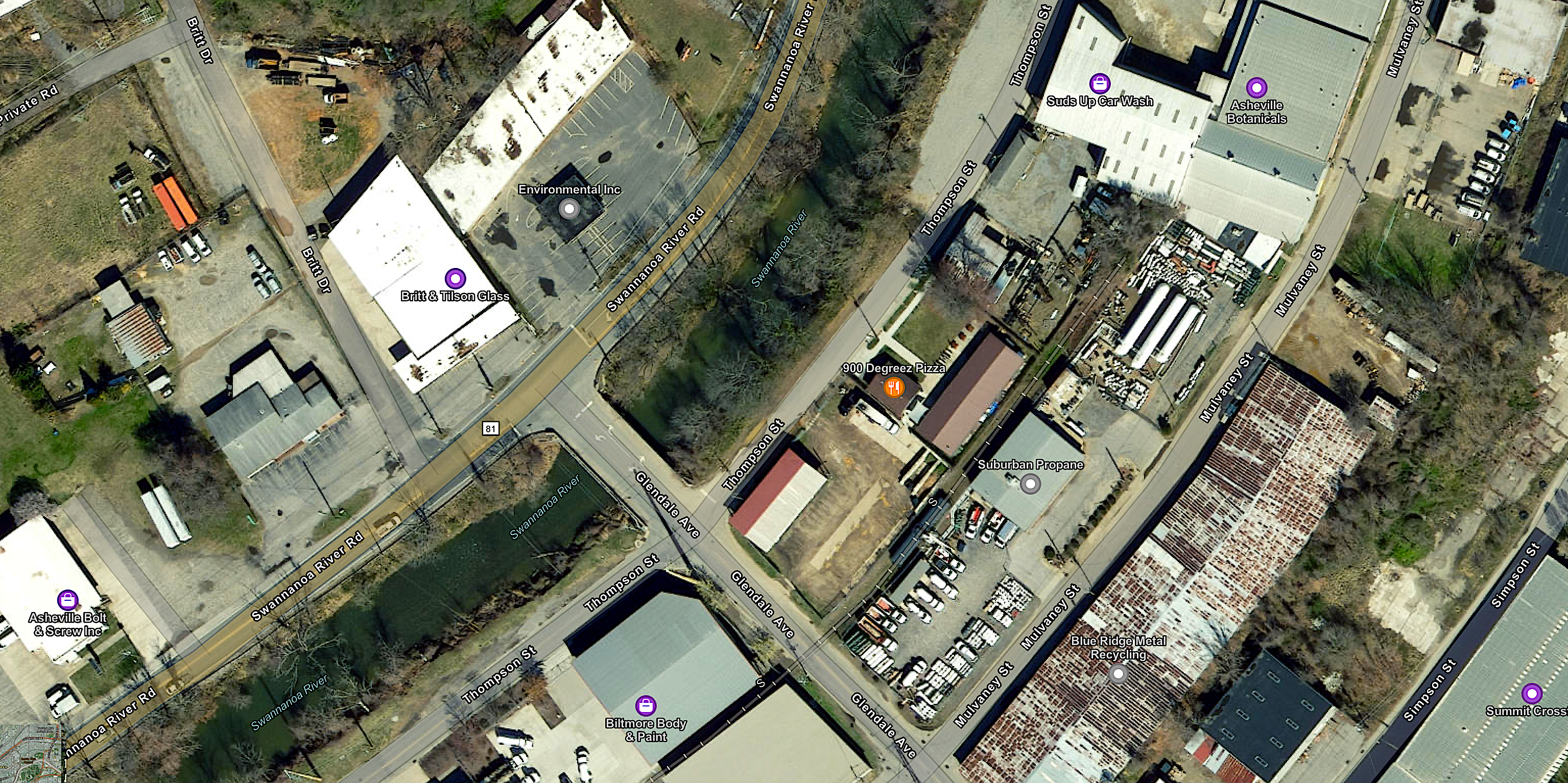
So far, more than 100 educators from eight public school districts have worked with Ready, Set, Resilience program materials to some extent. Recent additions include educators in Yancey and Buncombe counties in western North Carolina, where Hurricane Helene claimed more than 100 lives and caused more than $53 billion in direct and indirect damages.
Whether program adoption is benefitting students is one focus of Stevenson’s research at NC State. Currently, her team is working with participating educators and analyzing student assessments to determine how success might be measured.
“We need to understand what’s going on in the classrooms before we can understand how that’s impacting students,” Stevenson says.

Anecdotal evidence suggests the program is resonating.
Sarah Laws, a science teacher at Mountain Heritage High School in Yancey County, began using Ready, Set, Resilience shortly after Hurricane Helene. For one assignment, she asked her ninth grade students to form small groups, read a fable, and write their own by incorporating concepts from class lectures on ecology. Then, each group presented their stories to their classmates.
One group shared a fable about a snake shunned by its peers who ends up saving their habitat from developers. Realizing they had misjudged the serpent, the other animals accept their hero.
“When [these students] presented, I asked them how they got to this idea,” Laws recalls, “and they said that they have neighbors who see their piercings and the way they dress, and [those neighbors] don’t want to talk to them. But when the storm happened, everyone came together, and everyone was helping each other, and that was the first time [these students] felt like they were part of their community.”
Data collected by Stevenson’s team indicates that Ready, Set, Resilience has also had a strikingly positive effect on teachers. In particular, teachers appreciate the respect for their expertise, the opportunity for creative freedom, and building rapport with their students and each other. As it turns out, teacher workshops aren’t just for brainstorming — they’re also a safe place for catharsis.
That was Laws’ experience when DeMattia and several educators from coastal North Carolina led a workshop in Yancey County shortly before Thanksgiving in 2024. Dozens of local educators from the area showed up for what became a reprieve from Helene’s horrific aftermath.
“I’ve never seen a program like this change not only the students, but the faculty and the energy of a campus and, personally, me. I feel like a better person just being a part of this.”
— ROBERT CONDIE, EIGHTH GRADE ENGLISH TEACHER, BROAD CREEK MIDDLE SCHOOL
“Everything was just top-notch and exactly what we needed in terms of not reliving the trauma, not having to discuss what happened, but rather making it really positive,” Laws says.
The event was so popular, DeMattia and colleagues led two additional workshops last spring in Buncombe County, where Asheville is located, and teachers from western North Carolina traveled to the Marine Lab on the southeastern coast for a summer workshop.
Members of the Ready, Set, Resilience team also performed a puppet show, centered on a live oak, at the LEAF Global Arts Festival in Asheville last October, which brought more opportunity for connection with western North Carolinians.

Bright Futures
The Broad Creek Middle School students who performed at the Museum of Life and Science in Durham had risen before dawn to make the three-hour drive from their homes on North Carolina’s Crystal Coast.
Their presentation of Teddy and the Trash Monster was the zenith of weeks spent collaborating as members of an extracurricular club focused exclusively on Ready, Set, Resilience concepts. Condie founded the club as a way to bring kids of complementary talents together.
For the students, creating the puppet show was itself an exercise in building resilience. The script went through at least four drafts and ample discussion, according to lead writer Sophia, now a high school freshman.
“It was a lot of taking out things that didn’t work for everybody and adding in things that everybody enjoyed. It was interesting for me, because I usually write solo, to have a bunch of other opinions to worry about, but we did a sort of survey at the end, and everybody [in the club] was very happy with how it turned out,” Sophia says.
The experience was also good preparation for ninth grade, she adds. “I know I’m going to be able to do it instead of, can I do it? And I think that’s really helpful going into high school with that mindset.”
For his part, Condie has turned the club into a nonprofit to support Broad Creek Middle School students who want more engagement in resilience topics with communities and organizations focused on coastal stewardship.
“We’re trying to be leaders and pillars of the community and take pride in what we have, which is paradise here on the Crystal Coast,” Condie says. “I wanted to put [students] at the forefront of this and really have them own the future of what’s to come here at Broad Creek and abroad.”
The Ready, Set, Resilience team is planning to be part of the Museum of Life and Science’s Community Days on March 1st and 17th.
Ready, Set, Resilience also will hold a Summer institute for teachers this June at the Duke Marine Laboratory. If you’re interested in RSR, fill out this form to learn more and receive the project’s newsletter.
Julie Leibach composes news and feature stories about faculty and student research as the senior science writer for the Duke University Nicholas School of the Environment, which originally published this article Sept. 23. She is the former science editor of Coastwatch, home to several of her award-winning articles.
Shared under a CC-BY-ND license.
- Categories: