Coastal Currents
Research and News from North Carolina Sea Grant

NC Space Grant and NC Sea Grant Award Joint Fellowships
North Carolina Sea Grant and NC Space Grant have awarded 2026 Sea to Stars Research Fellowships to Robin Newton and Madeline Payne. Newton will investigate how new data from a recent NASA mission can inform wetland protections, and Payne will be working with aerial images to assess overlooked losses of sea grass.
The joint fellowship provides students with the opportunity to pursue interdisciplinary research addressing current challenges for North Carolina’s coastal and watershed ecosystems. Fellowship recipients use relevant instruments or remote-sensing data resources from the National Aeronautics and Space Administration (NASA) and the National Oceanic and Atmospheric Administration (NOAA).
“There are synergies across NASA and NOAA,” says Sandy Canfield, assistant director of NC Space Grant. “The tools and technologies that are publicly available allow users to explore our planet and analyze incredible data sources. This fellowship enables students to propose unique research questions that take advantage of these resources from NASA and NOAA.”

“Ground-Truthing NISAR Coastal Wetland Products Using Drone-based LiDAR Remote Sensing at the Rachel Carson Reserve, North Carolina”
Newton, a doctoral researcher in Marine Science and Conservation at Duke University, will be working with brand new data from NASA’s new NASA-ISRO Synthetic Aperture Radar (NISAR) satellite. Launched in July of 2025, the goal of the NISAR mission is to track and monitor various ecosystems to provide clearer insights into the changes happening on Earth’s surface.
“When NISAR launched last year, I saw an opportunity,” says Newton. “Tidal marshes are vital to so many ecosystem functions yet so vulnerable to flooding and encroaching tides, and that kind of monitoring tool is exactly what a barrier-island system like the Rachel Carson Reserve needs.”
NISAR uses radar waves to measure changes in land, vegetation, water and ice on the surface of the Earth. In theory, the satellite could be an essential tool for monitoring and preserving shifting ecosystems, like those along the North Carolina coast.
“The catch,” Newton says, “is that nobody has tested whether NISAR actually works in barrier-island habitats like ours. The sites NASA uses for accuracy testing are mostly river delta and tidal river marsh systems, which look quite different from a barrier island, structurally.”
Newton’s findings will be essential to helping the Rachel Carson Reserve staff manage and protect these fragile wetland ecosystems. The models that Newton provides will complement their existing methods, allowing them to make better informed decisions regarding ongoing and future restoration projects.
“It’s exciting that Newton will be ground-truthing — verifying data captured remotely through satellites matches with on the ground observations — right here on the Carolina coast,” says Canfield.
Newton says her work could lead to new options for programs with limited resources. “The Rachel Carson Reserve and other barrier island managers along the South Atlantic could have free satellite monitoring that tells them where habitats are changing between field visits.”

“Quantifying Hidden Seagrass Loss: Fine-scale Change Detection in Two U.S. Estuarine Systems”
Payne, a Ph.D. candidate in the University of North Carolina at Chapel Hill’s Environment, Ecology, and Energy Program, will investigate what she calls “hidden seagrass loss” in the Albemarle-Pamlico Estuary System in North Carolina and the Chandeleur Islands of Louisiana.
“This project grew from conversations with my advisor about what we actually mean when we call seagrass ‘patchy,’” says Payne. “The more I dug into the existing survey data, the more I realized that seagrass could be quietly disappearing in ways that only fine-scale mapping can reveal. For a habitat so ecologically important, this felt like a gap worth closing.”
Current seagrass maps classify areas as continuously covered, patchy (covering between 10 percent and 70 percent of an area), or no seagrass. In the past, researchers have only relied on changes in classification from continuous or patchy to no seagrass to estimate seagrass losses, overlooking the transition from continuous to patchy and losses occurring within the patchy category itself.
Payne will use aerial images to identify these transitions and quantify the seagrass loss that is currently overlooked.
“Beyond the science itself, I’m genuinely excited about the people, partnerships, and tools this project will bring together,” says Payne. “I’m really looking forward to mentoring an undergraduate researcher as part of this project, giving them hands-on experience with remote sensing techniques and real research questions while helping them build connections in the coastal science community.”
“Payne is an effective science communicator,” says Canfield, “and I look forward to seeing how her research will engage local stakeholders, help researchers and policymakers, and educate young students on seagrass ecology and coastal conservation.”
Not only will Payne’s analysis provide key insights for the Albemarle-Pamlico National Estuary Partnership, who maintain and restore ecosystems across the estuary system, but she will also work with SciREN Coast to develop an adaptable lesson plan for K-12 students. This lesson will engage students in identifying differences in habitat, helping to build long-term environmental literacy.
This will be Payne’s third fellowship with North Carolina Sea Grant. She previously served as the Hook, Line & Science Communication Fellow and as joint fellow for North Carolina Sea Grant and the Albemarle-Pamlico National Estuary Partnership.
Partnership with Louisiana
The fellowship offers a unique opportunity for collaboration, as the North Carolina Space Grant and Sea Grant Programs are partnering with the Louisiana Sea Grant to fund graduate fellows in both states.
While each state’s fellows pursue independent research projects, they will be able to work collaboratively as a cohort to share insights and knowledge throughout the fellowship. This exchange not only enhances the research capabilities of both programs but also promotes interdisciplinary approaches to tackling issues of coastal resilience across different geographic and ecological contexts.
“Working regionally allows the study of a larger area of habitat types, environmental conditions, and existing management strategies,” says John Fear, deputy director of North Carolina Sea Grant. “This bigger-picture perspective will hopefully make the results of each project more relevant across many areas, not just where the work took place.”
Learn more about the Sea-Space Research Fellowship.
Read about last year’s fellowship recipient.
— Lily Soetebier

Matt Bues Wins 2026 NC Coastal Research Fellowship
Matt Bues is the 2026 North Carolina Coastal Research Fellow. Bues, a master’s student in marine biology at the University of North Carolina at Wilmington, is investigating how North Carolina’s estuaries support the development of commercially important fish eggs and larvae.
The Coastal Research Fellowship is jointly funded by North Carolina Sea Grant and the North Carolina Coastal Reserve and Estuarine Research Reserve. Through the fellowship graduate students across North Carolina have the opportunity to apply for funding to pursue research at one or more of the Reserve’s research sites.
“The species that I work with mean a lot to me, both as a researcher and a recreational angler,” says Bues, “I am excited to branch out my research focus into our important estuaries.”
The protection offered by landforms like mudflats and marshes, as well as the abundance of different food sources, make estuaries an ideal location for many fish to lay their eggs and for larvae to grow and develop before fish venture into open ocean. Seventy-five percent of commercially important fish in North Carolina rely on estuaries for at least one of their developmental stages.
North Carolina’s estuaries vary greatly in their size, salinity, and landscape, all of which can provide different benefits and pose different challenges to larval fish. Bues is investigating these differences by sampling and evaluating both water and larvae from three different Reserve sites.
“I hope to learn how fish are using the estuaries within the Reserve to spawn and how we can apply that to fisheries management,” says Bues.
“We are very excited about this research endeavor,” says Justin Ridge, research coordinator for the Reserve. “It will help further connect the Reserve’s long-term water quality monitoring program across our sites with observations of larval fish community dynamics, which is relatively understudied in our southern sites. This will help us better track ecological community changes and better capture the role of our Reserve sites in the life cycles of fish that are commercially and recreationally important.”
The results of this research will help inform future conservation and management strategies for the delicate estuarine environments to promote sustainable fishing practices. Bues also plans to work directly with the NC Recreational Fishing Collaboration to raise awareness among anglers and boaters about the important role estuaries play in protecting their favorite species.
Learn more about the Coastal Research Fellowship.
— Lily Soetebier
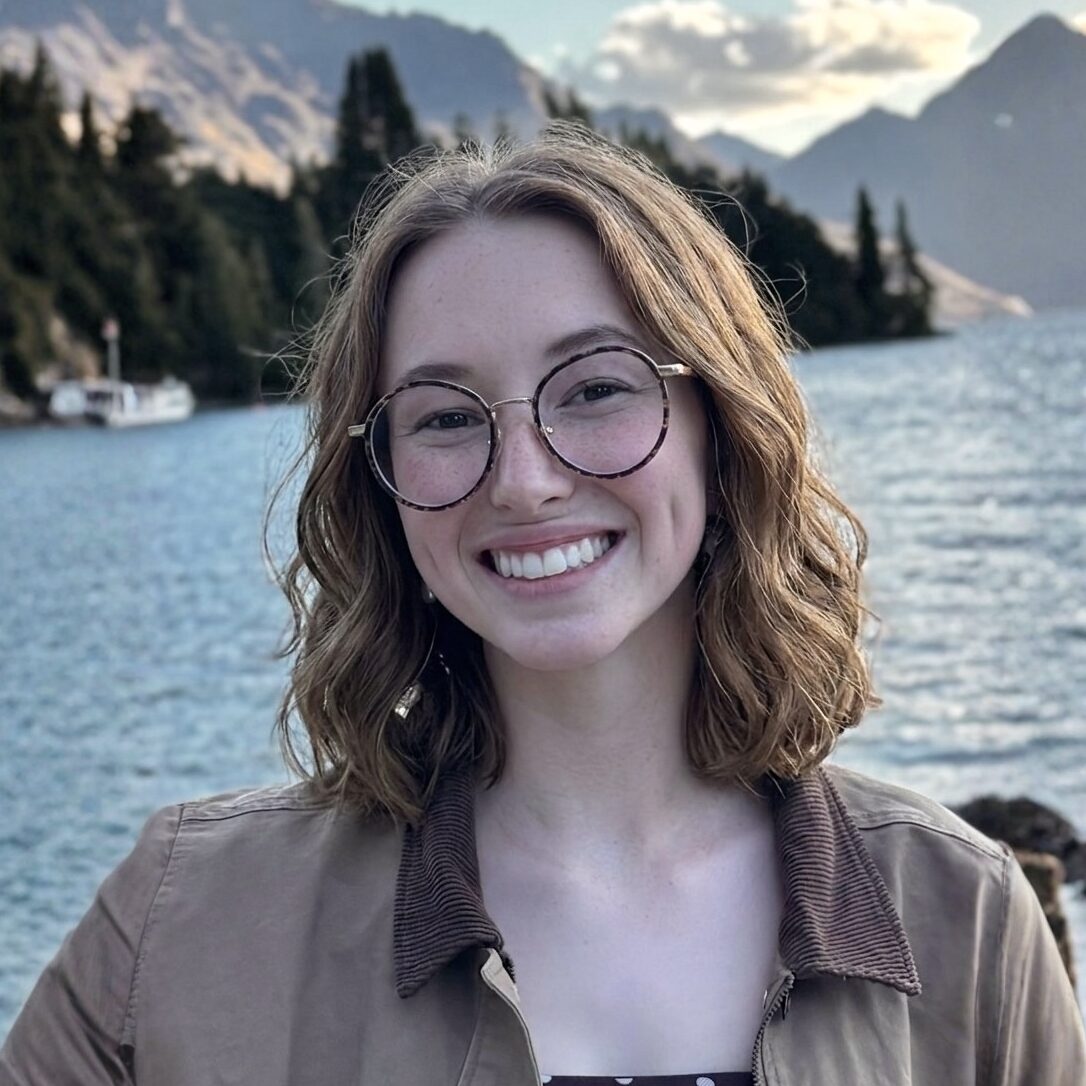
Hannah Miller Joins North Carolina Sea Grant, NC Space Grant, and NC WRRI as Social Media Specialist
Hannah Miller is the new communications and social media specialist for North Carolina Sea Grant, the NC Water Resources Research Institute, and NC Space Grant.
“I am super excited to work with all three of these programs, as well as the people that make them what they are,” says Miller. “These programs fund really important work that reaches from the mountains to the sea to the stars, and I can’t wait to help tell those stories.”
Miller joins the programs from the NC League of Conservation Voters Foundation where she was a content management and outreach associate. There, she managed the organization’s toolkit website – EnergyFundsForAll.org – which helps communities in the Carolinas find funding to lower their energy bills and implement sustainable energy sources like solar power.
“Hannah brings a variety of skills and on-the-ground experience we are excited to add to our communications team,” says Rebecca Jones, communications director for the three programs. “Hannah’s energy is contagious and we look forward to weaving her into the team.”
Originally from Harrisonburg, Virginia, Miller earned both of her degrees from Elon University — a Master’s in business analytics and a Bachelor’s in environmental and sustainability studies with minors in professional writing and policy studies. There, she also interned in the University’s Office of Sustainability for three years.
As a social media specialist, Miller will work to expand the visibility of all three programs by developing engaging content that highlights research, news, educational resources, and events.
“Science communication needs people from diverse backgrounds, and the communications team behind these programs is proof of that,” says Miller. “I feel really lucky to join such an accomplished group and help share the research and discoveries happening right here in North Carolina. While each initiative is distinct, all three have the same core mission to educate, engage, and inspire our communities, so I’m thrilled to be a part of that impact.”
In her spare time, she enjoys running, rock climbing, and reading (among other things that don’t start with an R).
— Carrie Clower

NC Sea Grant Announces 2026-28 Research Projects
North Carolina Sea Grant recently awarded funding to nine researchers from universities across the state. For two years, these researchers will apply innovative approaches to diverse coastal topics such as barotrauma mitigation methods, shark depredation events, and land-use scenarios for coastal resilience, to name a few.
“Through multidisciplinary research and close collaborations, our core research addresses both the challenges and opportunities that our coastal communities and environments present,” says Susan White, executive director of North Carolina Sea Grant. “These projects link science directly to needs along the state’s coast and in estuaries and watersheds now and into the future.”
The projects include lead researchers from NC State University, the University of North Carolina at Chapel Hill, East Carolina University, and the University of North Carolina Wilmington. In addition, Appalachian State University, Coastal Carolina Riverwatch, The Nature Conservancy, the University of Arkansas, and federal agency partners will play key roles, with most projects providing student support and training opportunities.
Funding for the research is from National Oceanic and Atmospheric Administration (NOAA) through the National Sea Grant College Program, along with matching funds from the state and the campuses leading the respective projects.
The following studies will run through early 2028.

Residency, Reproductive Phase, and Fecundity of Southern Flounder (Paralichthys lethostigma) on North Carolina Artificial Reefs and Shipwrecks
Principal Investigator: Rebecca Asch (East Carolina University)
Co-PI: Patrick Harris (ECU)
Co-Investigators: Eric Diaddorio and Jeff Buckel (NC State)
Students: Elefteria (“Terry”) Papavasilis (ECU)
Southern flounder (Paralichthys lethostigma) is one of North Carolina’s most valuable commercial and recreational finfish fisheries. Asch’s research will assess overwintering residency patterns on two artificial reefs and determine the reproductive status, ability to reproduce, and sex ratios of flounder caught at these locations.
Even though the species is overfished, researchers suspect there may be a “cryptic” population utilizing sandy expanses adjacent to artificial reefs and shipwrecks as offshore habitat. As a result, researchers will acoustically tag flounder found on the artificial reef and at a Civil War Blockade Runner off Cape Fear to determine residency of the fish at different times of the year. The research will benefit fisheries managers and fishermen.

When You Build It: Examining the Impacts of Oyster Reef Restoration Design on Native and Non-Native Faunal Recruitment and Succession
PI: April Blakeslee (East Carolina University)
Co-PIs: Rachel Gittman (ECU) and Brandon Puckett (NOAA’s Beaufort Laboratory)
Blakeslee will lead a team of researchers evaluating how different living shoreline designs, influence habitat and community changes through time. While some living shorelines attract oysters, some may also recruit non-indigenous species (NIS).

Researchers will sample and analyze habitat and community metrics using a series of habitat/faunal surveys and drone imagery at a restoration project implemented by the North Carolina Coastal Federation at the Theodore Roosevelt Natural Area at Pine Knoll Shores – one of the largest and most expansive living shoreline projects in North Carolina.

Comparing Barotrauma Mitigation Methods Applied to Red Snapper: Does Discard Survival Vary with Venting Location and is Recompression Superior?
PI: Jeffrey A. Buckel (NC State University)
Co-PIs: Brendan J. Runde (The Nature Conservancy), Nathan M. Bacheler (NOAA’s Beaufort Laboratory), and Paul J. Rudershausen (NC State).
Snappers and groupers are susceptible to pressure trauma known as barotrauma when brought to the surface, but there is a need to better understand if venting – puncturing the swim bladder to relieve pressure caused by trapped body gases – is an effective strategy for minimizing post-release mortality.

Buckel’s research will involve catching and tagging red snapper off Cape Lookout, NC to track movement data of fish released without any treatment compared to those recompressed, vented properly, and vented improperly. Results of this study will be of substantial interest to the South Atlantic Fishery Management Council to promote post-release survival of reef fishes.

Socioeconomic Impacts of Shark Depredation Events in North Carolina’s Commercial and For-Hire Fisheries
PI: Nadine Heck (East Carolina University)
Co-PI: John Whitehead (Appalachian State University)
Collaborator: Sara Mirabilio (NC Sea Grant)
Shark depredation — the partial or complete removal of a hooked fish by a shark — has become a critical human-wildlife interaction issue for commercial and recreational fisheries in North Carolina and one of the most consistent concerns raised to fishery managers by fishers in the Southeast. As a result, Heck’s team will assess the frequency of and factors influencing shark predation events, determine the economic impacts of these events on fisheries, and explore commercial and for-hire vessel operators’ opinions on strategies for event reduction.
Ultimately, results will translate into management actions to reduce impacts of shark depredation events on marine fisheries in not just North Carolina but the South Atlantic region. NC Sea Grant’s fisheries extension specialist, Sara Mirabilio, is a collaborator.

Evaluating the Accuracy, Precision, and Reliability of Citizen Science Data for Ecological Metrics in North Carolina Coastal Habitats
PI: Jessie C. Jarvis (University of North Carolina Wilmington)
Co-PI: Riley Lewis (Coastal Carolina Riverwatch)
Submerged Aquatic Vegetation (SAV) is a critical component of North Carolina’s coastal ecosystems, providing shoreline stabilization, fish and shellfish habitat, and improved water quality. However, SAV meadows are declining due to human activities and natural disturbances. Jarvis’s project will establish the NC SAV Watchers Program, a citizen science initiative designed to expand SAV monitoring capacity and strengthen community stewardship.

Trained citizens scientists will conduct monthly water quality monitoring and biannual SAV surveys as researchers collect parallel datasets to assess the reliability and accuracy of the citizen science data. If citizen scientists data can provide accurate assessments, their work can bridge crucial data gaps and help researchers and managers identify trends and prioritize conservation and restoration areas.

Investigating Tidal Floodwater Contamination Pathways from Sewage Exfiltration in Low-Lying Coastal Communities
PI: Natalie Nelson (North Carolina State University)
Co-PIs: Katherine Anarde (NC State), Angela Harris (NC State), and Kevin Befus (University of Arkansas)
Tidal flooding occurs during highest high tides of the year, such as “king” or perigean spring tides, and can become a public health hazard when sewage leaks (exfiltrates) and contaminates floodwaters. As a result, Nelson is leading a team that will identify sources for leaking sewage, measure fecal indicator bacteria in shallow groundwater during flood/non-flood conditions and with/without sewage pumping, and determine relationships between these bacteria in shallow groundwater, pumping, flood conditions, and groundwater depths.

Results from this project will advance understanding of how floodwaters become contaminated with exfiltrated sewage and help wastewater managers make decisions about whether to fortify existing infrastructure or adjust management practices to mitigate tidal flood contamination.

Quantifying Pathways Between Seagrass Habitat and Fisheries Production in North Carolina Estuaries
PI: Janet A. Nye (University of North Carolina at Chapel Hill)
Co-PIs: Joel Fodrie (UNC-CH) and Rachel Gittman (ECU)
Food web models are exceptionally useful tools to consider the impact of multiple stressors and to simulate potential environmental change and/or management scenarios. Nye’s team will work with scientists, fisheries managers, and fishers to develop a food web model to understand the role habitats play in fisheries production.

The team will quantify the extent to which seagrasses provide food and refuge from predators and quantify how efficiently food is transferred from primary producers, such as sea grass, to fishes. After identifying the best performing model, the team will simulate seagrass habitat decline and recovery scenarios to elucidate how habitat gains and losses can affect fisheries production.

Investigating the Impacts of Extreme Weather Events on Transport, Salinity, and Pollutant Dynamics in the Albemarle-Pamlico Estuarine System
PI: Qubin Qin (East Carolina University)
Co-PIs: Michael O’Driscoll (ECU) and Sean Charles (ECU)
Extreme weather events such as storms and droughts are becoming more frequent and intense, creating growing risks to estuarine water quality, ecosystem health, and coastal resilience. Qin’s project will combine high-resolution hydrodynamic modeling with field-based water quality surveys and long-term monitoring data to understand how storms and droughts alter salinity patterns, pollutant transport, and connectivity across the Albemarle-Pamlico Estuarine System, the second-largest estuary in the U.S.

This research will produce maps and metrics identifying hydrodynamically vulnerable zones or places at higher risk of erosion, flooding, and pollution places. It will also identify the variability of flushing, influx and reductions of freshwater, as well as high-priority sub-watersheds for management intervention. The findings will support water quality management and resilience planning in the state.

Coproduced Land-Use Scenarios for Coastal Resilience in North Carolina
PI: Steven M. Richter (East Carolina University)
Co-PI: Kiera O’Donnell (ECU)
High rates of population growth in the midst of housing shortages disrupts coastal North Carolina communities and complicates planning for growth. An inability to proactively plan land use diminishes community resilience and degrades coastal ecosystems. As a result, Richter’s project will develop a set of future land use scenarios co-produced with stakeholders across stakeholders across planning, disaster mitigation, housing, and environmental sectors to ensure their practical relevance and usability for the Wilmington region.

The scenarios will integrate growth dynamics, housing production, hazard exposure, and ecosystem health. Results will support local governments, planners, housing advocates, and environmental stakeholders to anticipate risks, identify trade-offs, and plan more proactively for resilient and sustainable futures.
Learn more about Sea Grant funding opportunities.
— Carrie Clower

New Reef Fish Fellow Jumps Into Angler Outreach
“The South Atlantic Sea Grant programs are excited to work with Ryan McMullen as our latest reef fish fellow,” says Scott Baker, fisheries specialist with North Carolina Sea Grant. “Ryan has a lot of enthusiasm for angler outreach and has jumped right into the fellowship plan of work.”
McMullen is the fourth South Atlantic Reef Fish Extension and Communication Fellow to serve with Sea Grant programs in the Southeast and the South Atlantic Fishery Management Council. The fellowship is a collaborative effort between the Sea Grant programs in North Carolina, South Carolina, Georgia, and Florida, and the South Atlantic Fishery Management Council.
McMullen liaisons among fishers, scientists, and managers on the nuanced issues of reef fish management. He communicates with community stakeholders about advances in fishery management research, particularly related to red snapper, greater amberjack, and other snapper-grouper reef fish.
“The Sea Grant Reef Fish Extension and Communication Fellowship has been instrumental in strengthening the Council’s ability to consistently share information and collaborate with fishing communities,” says Christina Curtis, a social scientist on the South Atlantic Fishery Management Council. “I’m excited to see how Ryan enhances awareness of best fishing practices and reef fish science throughout the region.”
Funding for this unique fellowship is part of a multi-region, multi-state reef fish extension and outreach programming effort to support sustainable fisheries through communication. The program’s goals are to translate the science coming from counts of great red snapper and greater amberjack and provide information on this work’s process, discoveries, and implications.
McMullen received his B.S. in Marine Biology and Ecology at the University of Miami, with a double minor in Biology and Ecosystem Science and Policy. He also came with research experiences in fisheries from his NOAA Hollings research internship and his work with the University of Miami Shark Research and Conservation Lab and the Bluefin Tuna Larval Ecology Lab.
“I am thrilled to have joined Sea Grant and the South Atlantic Fishery Management Council as the final Reef Fish Extension and Communication Fellow and am excited to apply my background in science communication to explore emerging trends in our offshore fisheries,” says McMullen. “Having led research in the South Atlantic for most of my early career, I appreciate the region’s unique relationship with its marine natural resources and look forward to deepening this understanding through my work with the region’s distinct fishing communities.”
Read more about the fellowship.

2026 WRRI Annual Conference Gathers Largest Attendance to Date
The 2026 WRRI Annual Conference hosted over 400 participants, making it WRRI’s largest event to date. This year’s conference featured engaging speakers on water resource issues, from flooding to managing many of NC’s unique stormwater and wastewater systems. Participants shared research and practical experiences with students, researchers, and practitioners from many disciplines.
The conference included 27 breakout sessions over 6 concurrent sessions, 46 poster presentations, and 16 lightning talks. Conference topics included discussions on water conservation, city water planning, stream ecology, water chemistry, and community engagement. As always the conference provided a space for networking with professionals across the state and, especially, for mentoring students interested in the field.
The range of topics and participants highlights the multifaceted nature of water resources and emphasizes the training, knowledge, and expertise needed to successfully manage our water resources.

WRRI Director, NCDEQ Secretary, and NCSU Interim Chancellor of Research Initiatives Give Opening Remarks
WRRI Director Susan White welcomed participants and introduced Reid Wilson, Secretary of the North Carolina Department of Environmental Quality (NCDEQ), and Jacob Jones, Interim Associate Vice Chancellor for Research Initiatives in the Office of Research and Innovation (ORI).
Secretary Wilson outlined three key directives for NCDEQ: “Helping communities recover from [Hurricane] Helene and prepare for future hazards, reducing people’s exposure to harmful forever chemicals like PFAS, and strengthening communities’ resilience to natural disasters across the state.”
Jones reminded the group that “WRRI, established in 1964, is our oldest active unit in ORI.” Jones emphasized the value of research investments in North Carolina and offered examples of other successful institutes in the ORI family and encouraged participants to embrace the “Think and Do” spirit of NCSU.
Opening Panel Covers the Complexity of Flooding in North Carolina
The opening panel focused on the complexity of flooding in North Carolina, from chronic coastal flooding to the devastating effects of Hurricane Helene in the mountains.
Stuart Brown, Flood Resiliency Blueprint Program Manager at NCDEQ outlined our state’s flood resilience blueprints which “provide local governments, the state, and partners with the data, tools, and processes to guide investments that minimize the cost and disruption of future flooding.”
Katherine Anarde, Assistant Professor, Civil, Construction, & Environmental Engineering at NCSU, presented flooding research that uses webcams to offer a more accurate picture of chronic flooding across coastal communities.
Brett Hartis, Lead Hydro Licensing Project Manager for Duke Energy’s Water Strategy and Hydro Licensing Team, offered a practitioner’s perspective on North Carolina’s water reservoir and dam systems.

BOTTOM (Right to Left): Kelly Pajek (4Culture Public Art), Tiffany Baker (Artist Good Neighborhood Project), and Erin Boyd (Department of Water Management, City of Durham), presented a panel on using art to educate and raise awareness about water resources in our communities.
Art and Water
Moderator Christy Perrin of WRRI facilitated the day two plenary, where three panelists discussed the importance of art in engaging communities about water resources and science.
Kelly Pajek, Public Art Director at 4Culture, discussed 4Culture’s work to transform water infrastructure in King County, Washington, with artwork from local artists.
Tiffany Baker, a visual artist from Brooklyn, NYC, discussed the role of artists in nonprofit work to engage people from a variety backgrounds and life stages about issues of flooding and water quality.
Erin Boyd, from the Department of Water Management in Durham, discussed a project closer to home where above-ground wastewater access pipes (or “risers”) are painted by local artists along a greenway to depict the importance of water to North Carolina communities.
Poster and Lightning Talk Winners
This year’s judges selected the top three poster presentation winners and an honorable mention from 46 presenters. Posters discussed water quality, aquatic ecology, flooding, and more.
First Place: James Harris – “Diamond Grinding Slurry Wastewater: Effects on Soil and Vegetation”
Second Place: Bigyapti Nepal – “Applications of Remote Sensing in Monitoring Coastal Cyanobacterial Bloom Risks”
Third Place: Ashud Kanu – “Comparative Annual and Seasonal Water Quality Assessment of Two Urbanized Watersheds in Durham, North Carolina
Honorable Mention: Will McClure – “Application of the Imaging Flow Cytobot (IFCB) to Monitor Harmful Algal Blooms in the Pamlico River Estuary”
Lightning Talk Winners
The conference included 16 engaging and informative lightning talks on a variety of topics. From these 16 talks, judges selected one winner and one runner-up.
Winner: Noah White – “Design, Construction, and Validation of a Mobile Rainfall Simulator”
Honorable Mention: Piper Monk – “Finding Septic Solutions for Healthy Communities and Environment in Mount Pleasant”
Thanks to the North Carolina Water Resources Association for sponsoring the student poster presentation and lightning talk awards.
2026 NC Source Water Protection Award
The NC Source Water Protection Award was awarded to Jeff Lineberger by the NC Source Water Collaborative for his unwavering contributions to source water protection in North Carolina as part of his career with Duke Energy and for his leadership in river basins in the Mountain and Piedmont regions of the state, especially the the Catawba–Wateree River Basin.
Lineberger was instrumental in creating the Catawba–Wateree Water Management Group (CWWMG) in 2007, which endorsed and supported projects that preserved the Catawba–Wateree system, ensuring consistent water quality and access for communities, industries, and ecosystems that depend on the basin.

Looking Ahead to Next Year
WRRI extends a very warm “thank you” to all who attended and presented, as well as to the conference sponsors for their support.

The 2027 WRRI Annual Conference will take place on March 23-24 at the McKimmon Center in Raleigh, NC. We look forward to seeing you there.
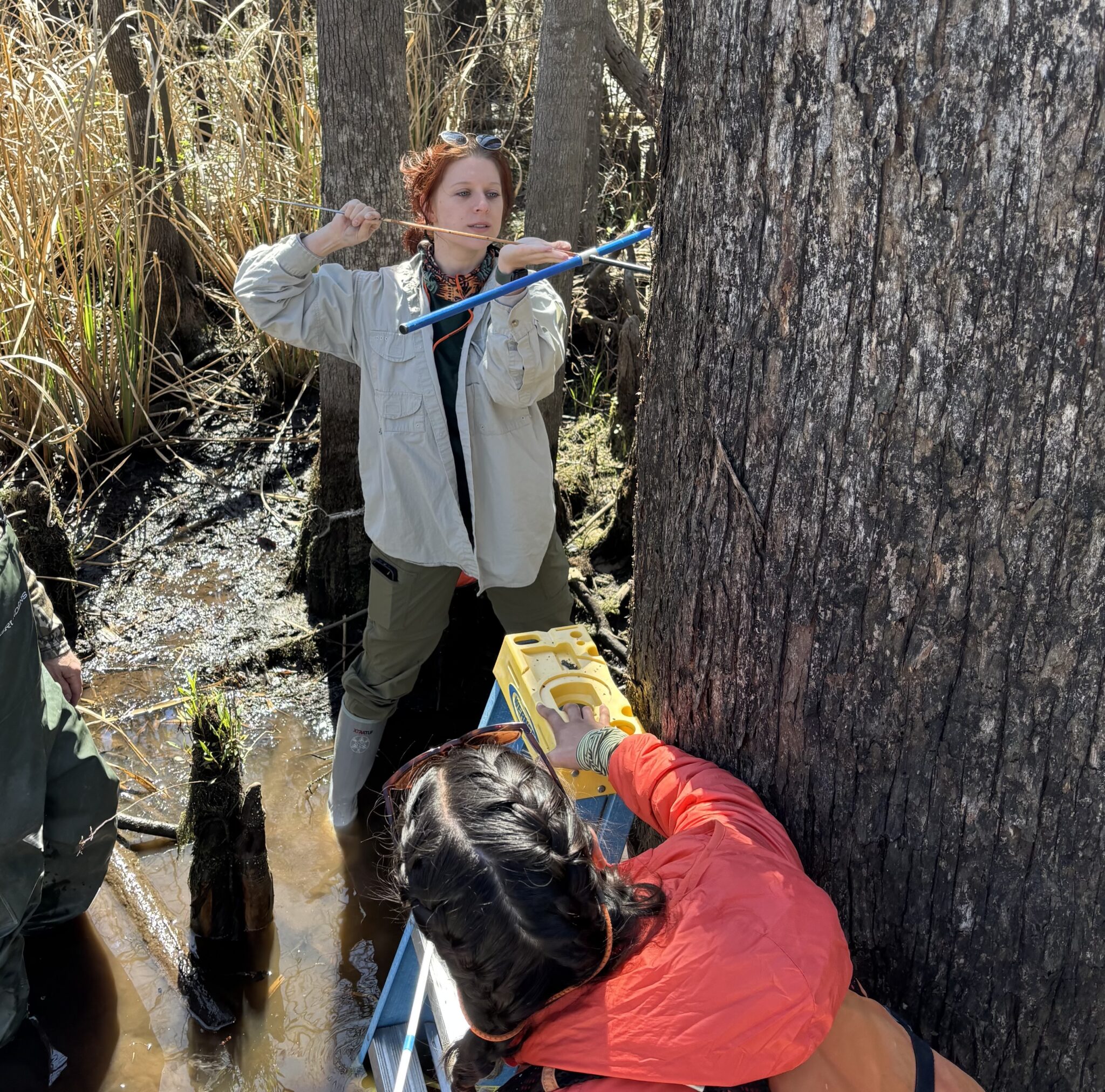
WRRI Announces 2026 Faculty Researchers
The North Carolina Water Resources Research Institute (WRRI) has awarded its faculty research grants for 2026. Recipients are jointly funded by NC WRRI and the U.S. Geological Survey (USGS).
WRRI is a federal-state partnership that receives funding through the U.S. Geological Survey in the U.S. Department of the Interior. The National Institutes for Water Resources partner with the U.S. Geological Survey in addressing water-related concerns by providing funding and resources for water resources-related research.
This year’s researchers are investigating the use of microbes for water quality management and monitoring, water resources education, emerging contaminants, saltwater intrusion, and algal blooms.
Ryan Paerl, Qubin Qin, Monica Rother, Rebecca Ward, and Mei Sun have been awarded funding for their projects. They represent North Carolina State University, East Carolina University, the University of North Carolina Wilmington, and the University of North Carolina at Charlotte.

Monica Rother, University of North Carolina Wilmington, Department of Environmental Sciences, with co-researchers Andrea D. Hawkes and Philip J. Bresnahan
Project: ”Canaries in the coal mine; ghost forests signal ecosystem and water quality degradation”
North Carolina, and the rest of the U.S. Atlantic and Gulf Coast, are experiencing an increase in “ghost forests.” Ghost forests are stands of dead trees and offer a sign of degrading water quality in a region due to salt water intrusion into freshwater resources. Rother and her team will “compile multiple lines of evidence—tree rings, dendrometry, microfossils from sediments, in-situ real-time water level and salinity data, and a historical archive” in order to determine “the timeline, causes, and future pathways of North Carolina’s changing wetland ecosystems.”
In understanding North Carolina’s coastal wetland history, her team hopes they can help project managers along the coast better prepare for the future and the impacts of long-term saltwater intrusion. The team intends to make their data available to stakeholders, including residents, resource managers, and planners.
Read more about Rother’s research on the impact of dredging in Wilmington on bald cypress trees and ever-growing ghost forests.

Ryan Paerl, North Carolina State University, Department of Marine, Earth and Atmospheric Sciences
Project: “Can polyamines be used for ‘eco-friendly’ mitigation of filamentous cyanobacterial blooms?”
Harmful algal blooms (HABs), created by cyanobacteria, decrease water quality and ecosystem health. Methods exist to control and limit them, however these methods can leave metals and cyanotoxins in the ecosystem that can damage food webs and wildlife. Paerl and his team will investigate alternative methods for mitigating cyanobacteria HABs, using a natural polyamine called spermidine as an algaecide.

Their hope is that this method would specifically target the undesired cyanobacteria, rather than indiscriminately harm other organisms, and would limit negative impacts on local water quality and wildlife. This research will involve investigating the impact of this “ecofriendly cyano-HAB-targeted treatment” on different kinds of cyanobacteria, analyze any changes in bacterial communities and oxygen levels after its use, and estimate its financial cost as a treatment.
Paerl’s previous research focuses on aquatic microbial ecology, and his lab frequently partners with centers such as the North Carolina Center for Coastal Algae People and Environment and North Carolina Sea Grant.
Qubin Qin, East Carolina University, Department of Coastal Studies with co-researchers Michael O’Driscoll and Sean Charles
Project: “Evaluating the Interactions between Coastal Water Level Rise and Freshwater Withdrawals on Saltwater Intrusion along the Tar River: Implications for Water Supply and Freshwater Ecosystem Health”

The Tar-Pamlico River watershed of North Carolina is an important water resource in the state, specifically for residents of Greenville, Rocky Mount, Tarboro, and Louisburg. The watershed begins in the Piedmont of North Carolina, and flows through the Coastal Plain and the Pamlico River Estuary, then empties into the Pamlico Sound. Unfortunately, the sustainability of this waterway is under threat by saltwater intrusion, a phenomena where saltwater from the ocean infiltrates underground freshwater aquifers.
Saltwater intrusion results in depleted water quality for North Carolinians who depend on the Tar-Pamlico River watershed for drinking water. Occurrences of saltwater intrusion increase when groundwater reservoirs are over pumped and when sea level rises.
Qin and his team will research limits on how much groundwater can be pumped out of these groundwater reservoirs before saltwater intrusion becomes an issue, as well as determine how far inland saltwater intrusion extends under different scenarios.
Qin’s past projects, like this one, seek to create simulations and scenarios of ecological conditions that can be used to generate real-world solutions for ecosystems.

Erin Seekamp and Rebecca Ward, North Carolina State University, with co-Researchers Marsha Sirkin, Allison Whitaker, and Rebecca Bloch, DVM.
Project: “Strengthening HAB Management through Classroom-Based Educational Research”
Harmful algal blooms (HABs) pose a risk not only to aquatic ecosystems and water quality, but also to human and animal health. Unfortunately, the current response system for alerting communities to harmful algal blooms is decentralized and involves multiple agencies. Communication and education about harmful algal blooms is limited in some areas. Seekamp and her team will develop a HABs-focused education program and classroom based intervention for 5th grade students.

The goal of the program and intervention is to introduce students to environmental health topics and enhance their willingness to “to adopt preventative behaviors concerning HABs.”
The research project will involve using Environmental Health Literacy frameworks and the Health Belief Model to create featuring materials such as factsheets, booklets, and videos which can be reused and repackaged for classrooms across the state.
Focus groups with state and local agencies will refine the material and inform future steps for this project. Seekamp is Goodnight Distinguished Professor, Director Coastal Resilience and Sustainability Initiative who works at the intersection of culture and climate adaptation.
Ward’s past work focuses on supporting communities through awareness, communication and capacity building. She has partnerships with the Carolinas Collaborative on Climate Health and Equity (C3HE), Climate Solutions Collaborative, and Coastal Resilience and Sustainability Initiative (CRSI).

Mei Sun, University of North Carolina at Charlotte, Department of Civil & Environmental Engineering
Project: “An effective approach to treat and reuse PFAS-laden ion exchange resins”
Per- and polyfluoroalkyl substances, commonly known as PFAS, are long lasting synthetic chemicals that have the potential to leach into ecosystems and cause adverse health effects or ecological impacts. PFAS are particularly a problem for municipal water supplies because they must be removed before water is distributed to the public.
Ion exchange has proven a possible method of filtering PFAS out of water. The PFAS filtered out of the water are stored in resins, which are incinerated or put into landfills.

This method is expensive, and PFAS have the potential to be re-released into the environment. Sun’s research explores the possibility of regenerating the resins using tetrachloro-metal anions and simultaneously destroying PFAS with an ultraviolet (UV)/sulfite treatment. The goal of this project is a more sustainable and cost-effective system that allows for reuse of the resins.
Read about Sun’s past research on improving total organic fluorine analysis, a method for determining PFAS concentration in drinking water, and on determining methods to remove PFAS from wastewater using ion exchange, UV light, and sulfite.
— Josephine Kinsey


