NC Sea Grant Announces 2026-28 Core Research Projects
Nine researchers will soon begin two-year projects focused on diverse coastal topics.

Contact:
John Fear, jmfear@ncsu.edu
North Carolina Sea Grant recently awarded core funding to nine researchers from universities across the state. For two years, these researchers will apply innovative approaches to diverse coastal topics such as barotrauma mitigation methods, shark depredation events, and land-use scenarios for coastal resilience, to name a few.
“Through multidisciplinary research and close collaborations, our core research addresses both the challenges and opportunities that our coastal communities and environments present,” says Susan White, executive director of North Carolina Sea Grant. “These projects link science directly to needs along the state’s coast and in estuaries and watersheds now and into the future.”
The projects include lead researchers from NC State University, the University of North Carolina at Chapel Hill, East Carolina University, and the University of North Carolina Wilmington. In addition, Appalachian State University, Coastal Carolina Riverwatch, The Nature Conservancy, the University of Arkansas, and federal agency partners play key roles, with most projects providing student support and training opportunities.
Funding for the research is from National Oceanic and Atmospheric Administration (NOAA) through the National Sea Grant College Program, along with matching funds from the state and the campuses leading the respective projects. The following studies will run through early 2028:
Residency, Reproductive Phase, and Fecundity of Southern Flounder (Paralichthys lethostigma) on North Carolina Artificial Reefs and Shipwrecks
Principal Investigator: Rebecca Asch (East Carolina University)
Co-PI: Patrick Harris (ECU)
Co-Investigators: Eric Diaddorio and Jeff Buckel (NC State)
Students: Elefteria (Terry) Papavasilis (ECU)


Southern flounder (Paralichthys lethostigma) is one of North Carolina’s most valuable commercial and recreational finfish fisheries. Asch’s research will assess overwintering residency patterns on two artificial reefs and determine the reproductive status, ability to reproduce, and sex ratios of flounder caught at these locations. Even though the species is overfished, researchers suspect there may be a “cryptic” population utilizing sandy expanses adjacent to artificial reefs and shipwrecks as offshore habitat. As a result, researchers will acoustically tag flounder found on the artificial reef and at a Civil War Blockade Runner off Cape Fear to determine residency of the fish at different times of the year. The research will benefit fisheries managers and fishermen.
When You Build It: Examining the Impacts of Oyster Reef Restoration Design on Native and Non-Native Faunal Recruitment and Succession
PI: April Blakeslee (East Carolina University)
Co-PIs: Rachel Gittman (ECU) and Brandon Puckett (NOAA’s Beaufort Laboratory)
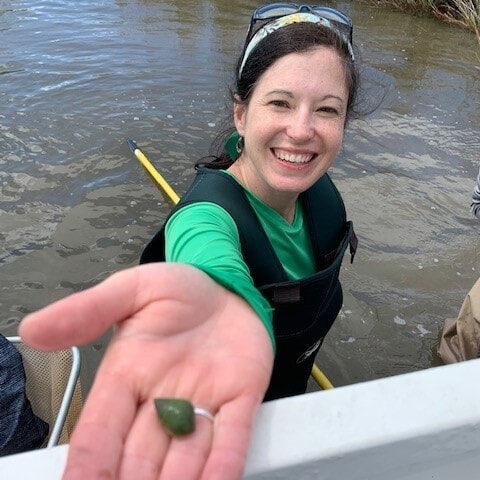

Blakeslee will lead a team of researchers evaluating how different living shoreline designs, influence habitat and community changes through time. While some living shorelines attract oysters, some may also recruit non-indigenous species (NIS). Researchers will sample and analyze habitat and community metrics using a series of habitat/faunal surveys and drone imagery at a restoration project implemented by the North Carolina Coastal Federation at the Theodore Roosevelt Natural Area at Pine Knoll Shores – one of the largest and most expansive living shoreline projects in North Carolina.
Comparing Barotrauma Mitigation Methods Applied to Red Snapper: Does Discard Survival Vary with Venting Location and is Recompression Superior?
PI: Jeffrey A. Buckel (North Carolina State University)
Co-PIs: Brendan J. Runde (The Nature Conservancy), Nathan M. Bacheler (NOAA’s Beaufort Laboratory), and Paul J. Rudershausen (NC State)


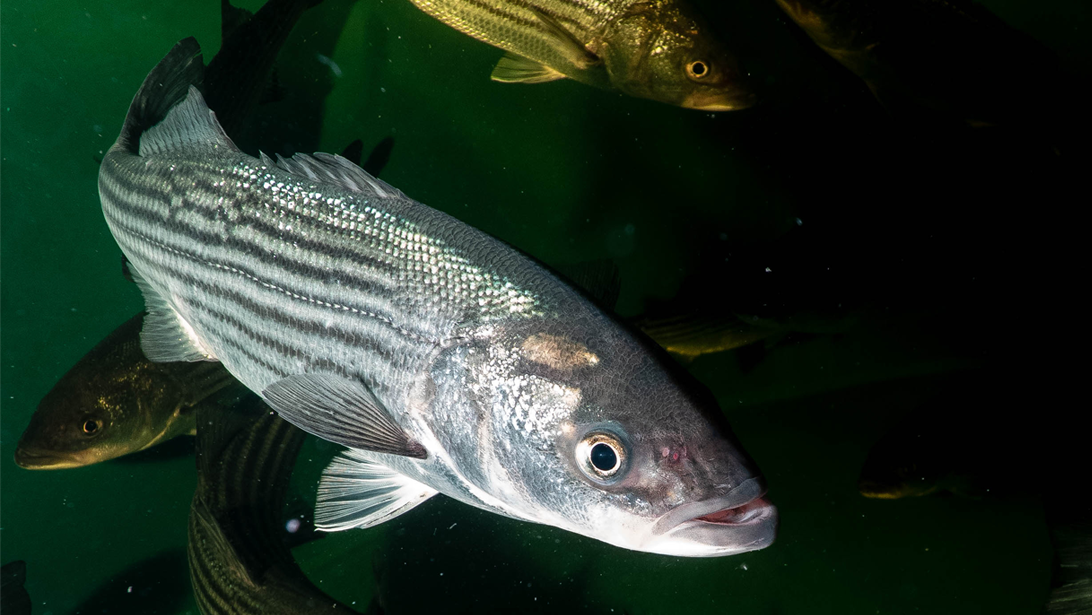
Snappers and groupers are susceptible to pressure trauma known as barotrauma when brought to the surface, but there is a need to better understand if venting – puncturing the swim bladder to relieve pressure caused by trapped body gases – is an effective strategy for minimizing post-release mortality. Buckel’s research will involve catching and tagging red snapper off Cape Lookout, NC to track movement data of fish released without any treatment compared to those recompressed, vented properly, and vented improperly. Results of this study will be of substantial interest to the South Atlantic Fishery Management Council to promote post-release survival of reef fishes.
Socioeconomic Impacts of Shark Depredation Events in North Carolina’s Commercial and For-Hire Fisheries
PI: Nadine Heck (East Carolina University)
Co-PI: John Whitehead (Appalachian State University)
Collaborator: Sara Mirabilio (NC Sea Grant)

Shark depredation–the partial or complete removal of a hooked fish by a shark–has become a critical human-wildlife interaction issue for commercial and recreational fisheries in North Carolina and one of the most consistent concerns raised to fishery managers by fishers in the Southeast. As a result, Heck’s team will assess the frequency of and factors influencing shark predation events, determine the economic impacts of these events on fisheries, and explore commercial and for-hire vessel operators’ opinions on strategies for event reduction. Ultimately, results will translate into management actions to reduce impacts of shark depredation events on marine fisheries in not just North Carolina but the South Atlantic region. NC Sea Grant’s fisheries extension specialist, Sara Mirabilio, is a collaborator.
Evaluating the Accuracy, Precision, and Reliability of Citizen Science Data for Ecological Metrics in North Carolina Coastal Habitats
PI: Jessie C. Jarvis (University of North Carolina Wilmington)
Co-PI: Riley Lewis (Coastal Carolina Riverwatch)

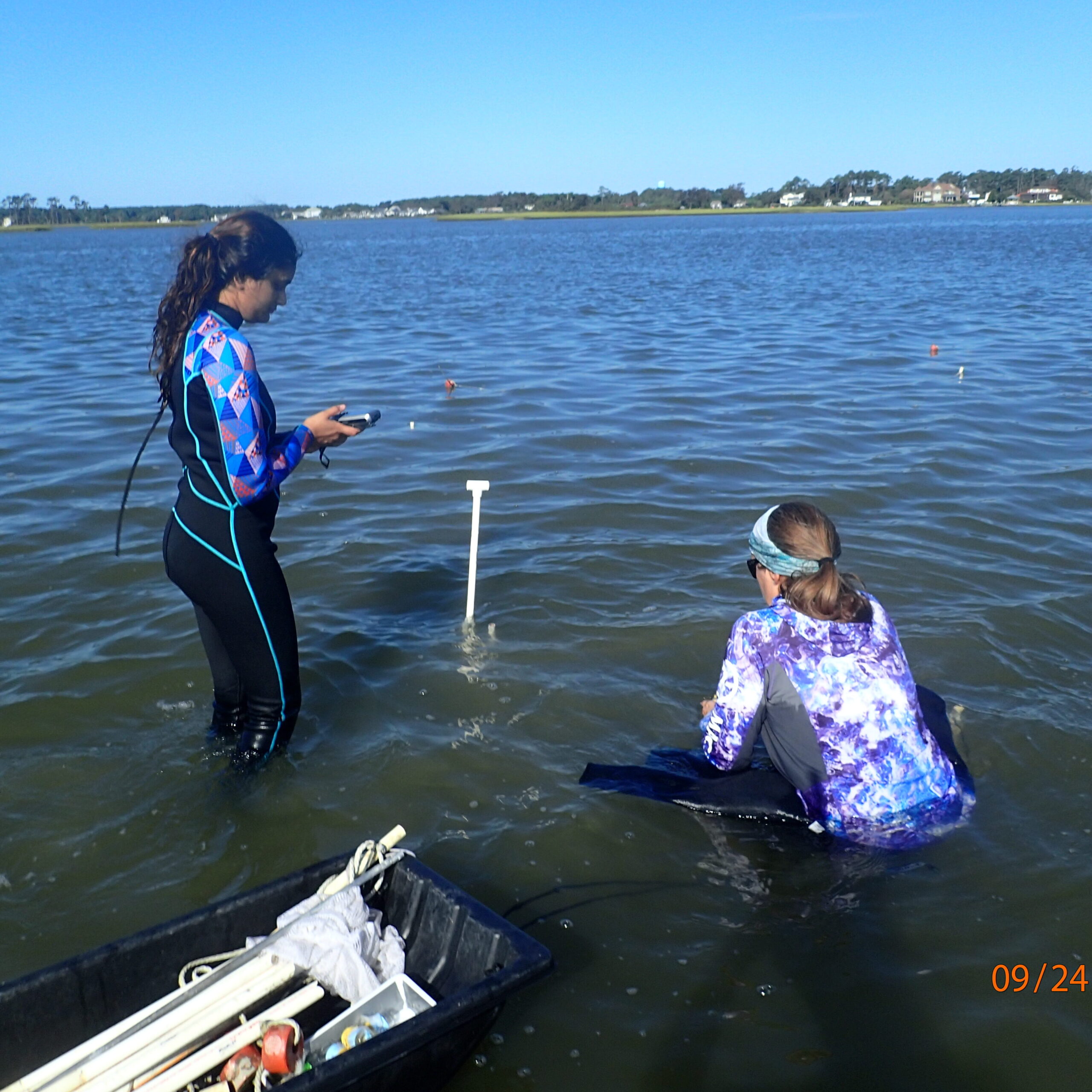
Submerged Aquatic Vegetation (SAV) is a critical component of North Carolina’s coastal ecosystems, providing shoreline stabilization, fish and shellfish habitat, and improved water quality. However, SAV meadows are declining due to human activities and natural disturbances. Jarvis’s project will establish the NC SAV Watchers Program, a citizen science initiative designed to expand SAV monitoring capacity and strengthen community stewardship. Trained citizens scientists will conduct monthly water quality monitoring and biannual SAV surveys as researchers collect parallel datasets to assess the reliability and accuracy of the citizen science data. If citizen scientists data can provide accurate assessments, their work can bridge crucial data gaps and help researchers and managers identify trends and prioritize conservation and restoration areas.
Investigating Tidal Floodwater Contamination Pathways from Sewage Exfiltration in Low-Lying Coastal Communities
PI: Natalie Nelson (North Carolina State University)
Co-PIs: Katherine Anarde (NC State), Angela Harris (NC State), and Kevin Befus (University of Arkansas)

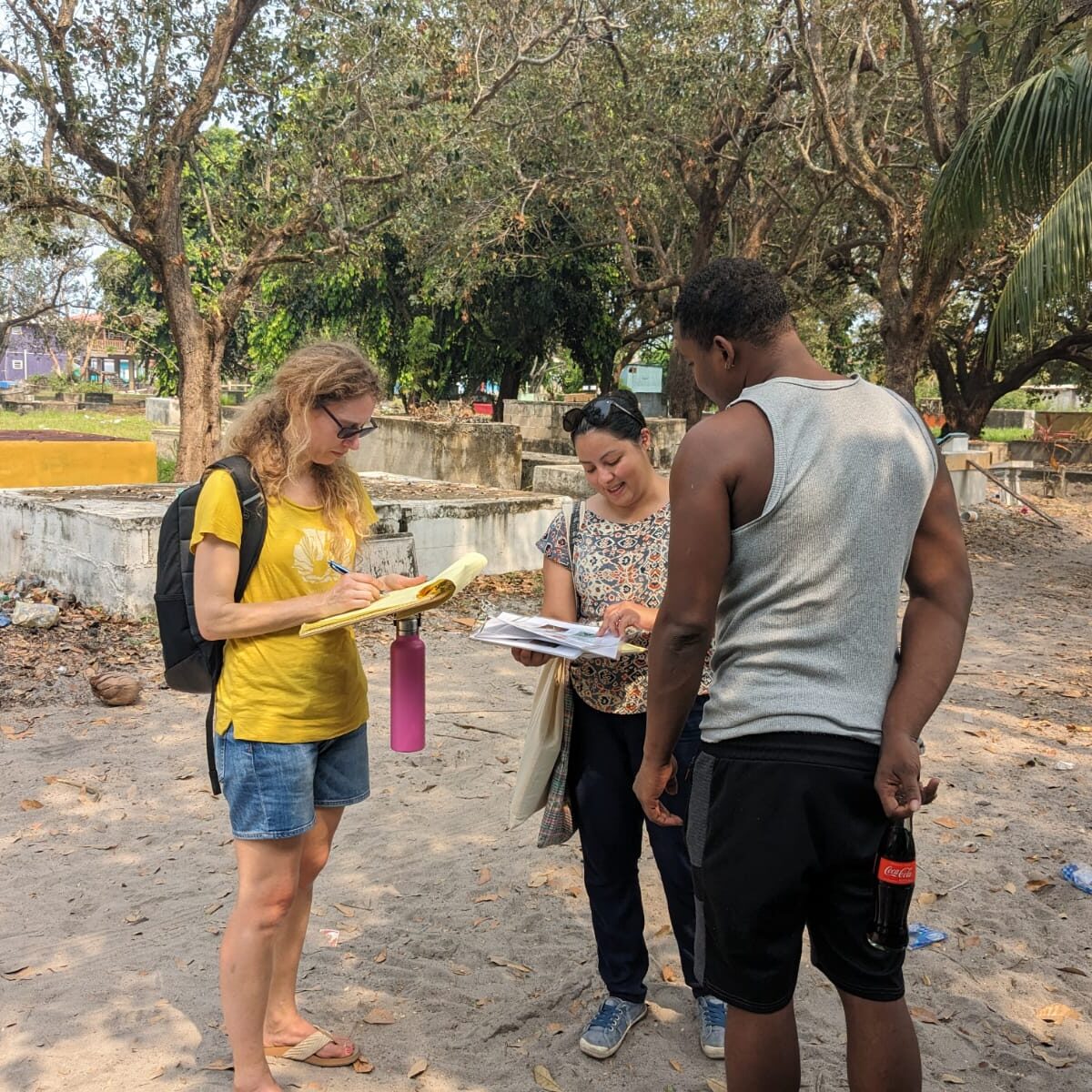
Tidal flooding occurs during highest high tides of the year, such as “king” or perigean spring tides, and can become a public health hazard when sewage leaks (exfiltrates) and contaminates floodwaters. As a result, Nelson is leading a team that will identify sources for leaking sewage, measure fecal indicator bacteria in shallow groundwater during flood/non-flood conditions and with/without sewage pumping, and determine relationships between these bacteria in shallow groundwater, pumping, flood conditions, and groundwater depths. Results from this project will advance understanding of how floodwaters become contaminated with exfiltrated sewage and help wastewater managers make decisions about whether to fortify existing infrastructure or adjust management practices to mitigate tidal flood contamination.
Quantifying Pathways Between Seagrass Habitat and Fisheries Production in North Carolina Estuaries
PI: Janet A. Nye (University of North Carolina at Chapel Hill)
Co-PIs: Joel Fodrie (UNC-CH) and Rachel Gittman (ECU)

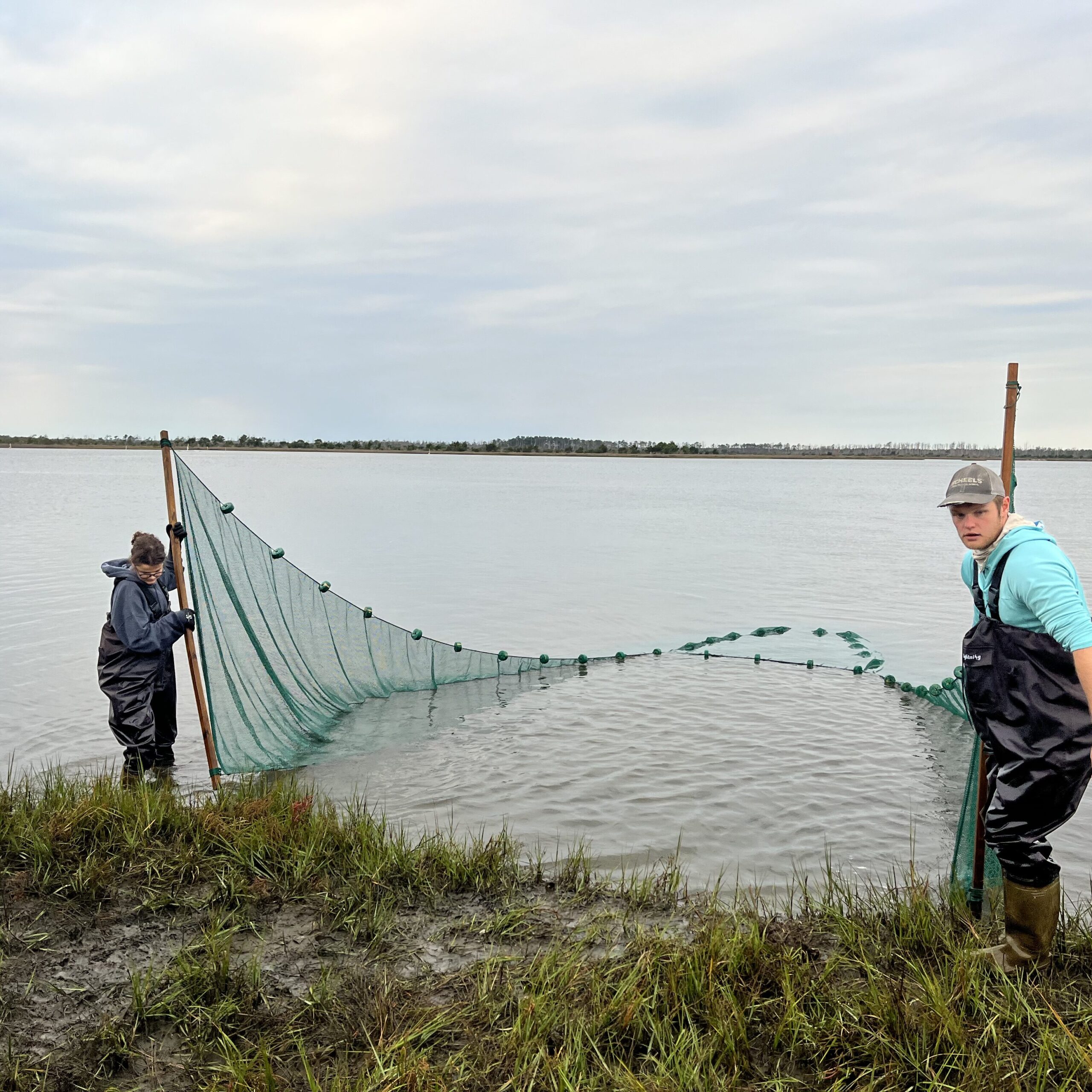
Food web models are exceptionally useful tools to consider the impact of multiple stressors and to simulate potential environmental change and/or management scenarios. Nye’s team will work with scientists, fisheries managers, and fishers to develop a food web model to understand the role habitats play in fisheries production. The team will quantify the extent to which seagrasses provide food and refuge from predators and quantify how efficiently food is transferred from primary producers, such as sea grass, to fishes. After identifying the best performing model, the team will simulate seagrass habitat decline and recovery scenarios to elucidate how habitat gains and losses can affect fisheries production.
Investigating the Impacts of Extreme Weather Events on Transport, Salinity, and Pollutant Dynamics in the Albemarle-Pamlico Estuarine System
PI: Qubin Qin (East Carolina University)
Co-PIs: Michael O’Driscoll (ECU) and Sean Charles (ECU)

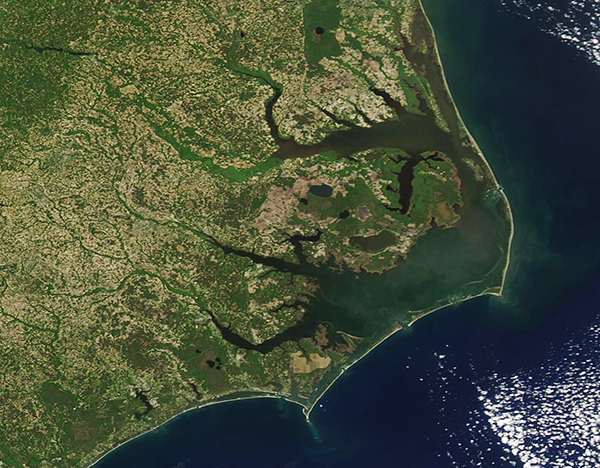
Extreme weather events such as storms and droughts are becoming more frequent and intense, creating growing risks to estuarine water quality, ecosystem health, and coastal resilience. Qin’s project will combine high-resolution hydrodynamic modeling with field-based water quality surveys and long-term monitoring data to understand how storms and droughts alter salinity patterns, pollutant transport, and connectivity across the Albemarle-Pamlico Estuarine System, the second-largest estuary in the U.S. This research will produce maps and metrics identifying hydrodynamically vulnerable zones or places at higher risk of erosion, flooding, and pollution places. It will also identify the variability of flushing, influx and reductions of freshwater, as well as high-priority sub-watersheds for management intervention. The findings will support water quality management and resilience planning in the state.
Coproduced Land-Use Scenarios for Coastal Resilience in North Carolina
PI: Steven M. Richter (East Carolina University)
Co-PI: Kiera O’Donnell (ECU)

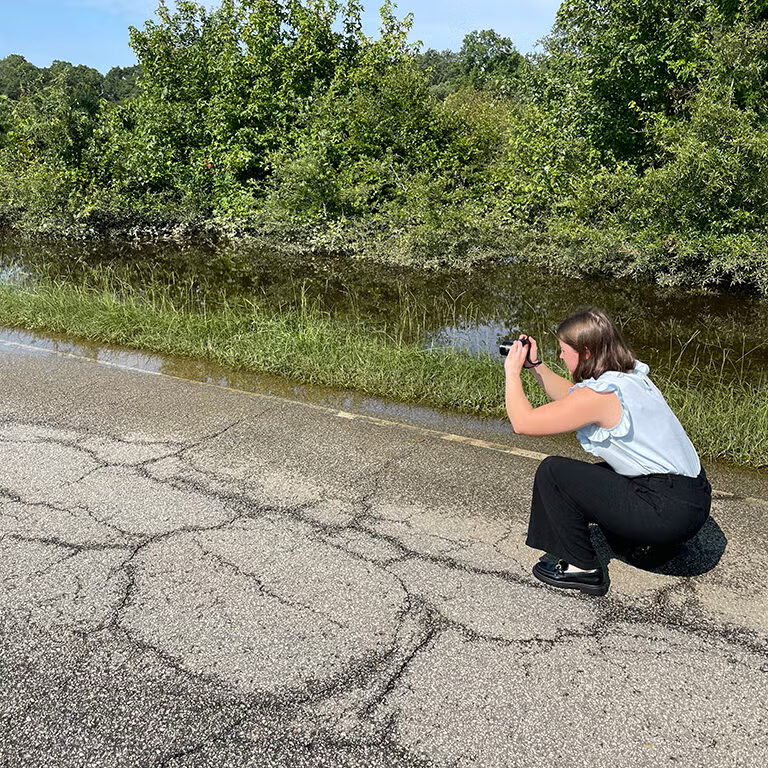
High rates of population growth in the midst of housing shortages disrupts coastal North Carolina communities and complicates planning for growth. An inability to proactively plan land use diminishes community resilience and degrades coastal ecosystems. As a result, Richter’s project will develop a set of future land use scenarios co-produced with stakeholders across stakeholders across planning, disaster mitigation, housing, and environmental sectors to ensure their practical relevance and usability for the Wilmington region. The scenarios will integrate growth dynamics, housing production, hazard exposure, and ecosystem health. Results will support local governments, planners, housing advocates, and environmental stakeholders to anticipate risks, identify trade-offs, and plan more proactively for resilient and sustainable futures.
Learn more about Sea Grant funding opportunities.
- Categories: